


The service is delivered by a team of HCPC-registered Clinical Scientists specialising in gastrointestinal physiology. Our scientists are experienced in both oesophageal and anorectal physiology and play an important role in the diagnosis and management of gastrointestinal disorders.
In addition to diagnostic testing, members of the team contribute to:
- Multidisciplinary team meetings
- Clinical governance
- Quality improvement and service evaluation
- Education and workforce development
- Research and innovation
- Regional service development
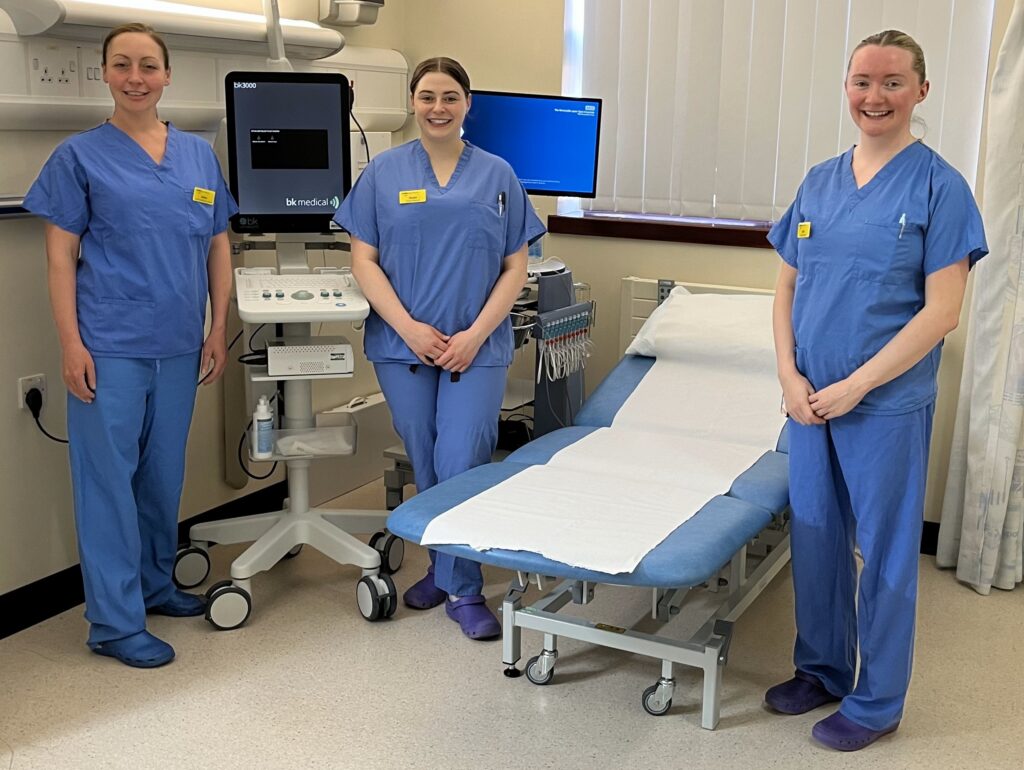
Image: Some of GI Physiology Service Team members
Where We Work
The Gastrointestinal Physiology Service is based within the Leazes Wing at the Royal Victoria Infirmary, part of Newcastle upon Tyne Hospitals NHS Foundation Trust.
The team also provides specialist gastrointestinal physiology services at the University Hospital of North Durham, part of County Durham and Darlington NHS Foundation Trust.
Quality, Governance and Accreditation
The Gastrointestinal Physiology Service is committed to delivering safe, effective and patient-centred care.
The service:
- Follows national and international gastrointestinal physiology standards and guidance.
- Participates in clinical audit, quality improvement and service evaluation.
- Supports professional accreditation and continuing professional development.
- Contributes to multidisciplinary team discussions and clinical governance processes.
- Regularly reviews patient feedback to support service improvement.
Education, Training and Workforce Development
The Gastrointestinal Physiology Service is recognised for its contribution to Healthcare Science education and training. In partnership with Newcastle University, members of the GIPS team contribute to the delivery of teaching for the national Gastrointestinal Physiology Scientist Training Programme (STP), supporting the education and development of future Clinical Scientists.
Our Clinical Scientists contribute to lectures, tutorials, practical skills training, workplace supervision and professional mentorship. Team members are actively involved in supporting postgraduate education and training across the region and nationally.
Research and Innovation
Research, innovation and continuous improvement are central to our service.
Our team actively participates in:
- Clinical audit
- Service evaluation
- Quality improvement projects
- Research collaborations
These activities help ensure patients benefit from evidence-based practice and advances in gastrointestinal physiology. Patients may occasionally be invited to participate in research studies. Participation is entirely voluntary and choosing not to participate will not affect patient care.


