


Scott is using the RDI fellowship to undertake qualitative research to explore patient perceptions and experiences of group consultations for knee osteoarthritis.
Over the course of the project, Scott aims to undertake 1:1 semi-structured interviews with 15 patients who have attended a group consultation, use thematic analysis to identify enabling themes, and gain deeper insight into the patient experience.
By understanding the patient perspective and exploring the key therapeutic factors that the group interaction offers, Scott hopes the research will guide development of the groups, maximising their effectiveness for patients and promoting their use for other MSK conditions.
Scott’s RDI Fellowship allows him to dedicate two-and-a-half days per week to his master’s studies while continuing his clinical duties for the remainder of the week. As part of the fellowship, funding has also been provided for backfill, ensuring the department receives clinical support and enabling a smooth transition for Scott as he undertakes his studies.
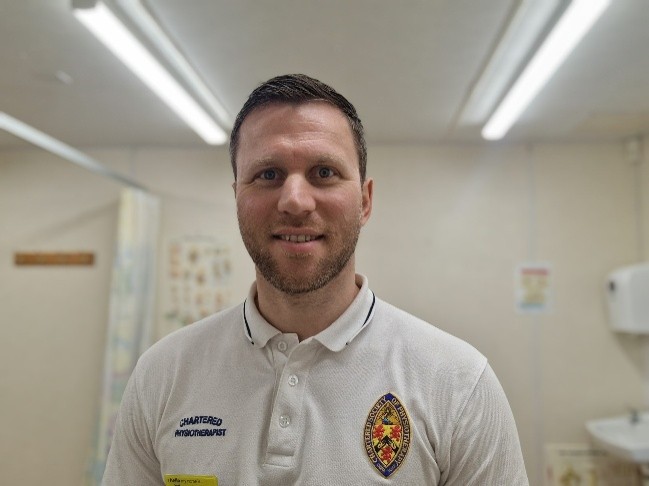
Scott said:
“I chose to apply for the RDI funding because it provided an opportunity to develop and consolidate my understanding of research design and methodology.
“I am especially interested in gaining deeper knowledge of qualitative research methods and patient and public involvement , both of which are key to the early phase of my research.
“I also recognise that time is a vital factor when completing research, and the opportunity to have two-and-a-half days of dedicated time per week to work on this seemed too good of an opportunity to miss.’
Scott’s research journey
Scott has worked in musculoskeletal practice for 20 years. During this time, he has seen the role of physiotherapy change significantly due to better adoption of evidence-based practice among the profession.
Scott has always had a keen interest in the the ability for research to change and influence practice. Prior to his success with the fellowship, Scott was awarded a research internship through the National Institute for Health and Social Care Research (NIHR) through Sheffield Hallam University in 2024.
During the internship he conducted a service evaluation project focusing on assessing the impact of group consultations for patients with knee osteoarthritis on arthritis-related self-efficacy.
Commenting on the internship, Scott said:
“This project deepened my understanding of formulating research questions, designing protocols, and addressing ethical considerations in line with NHS trust guidelines. It also significantly improved my scientific writing skills, particularly in producing concise and professionally structured articles.”
Scott presented the findings to the clinical team and was recently successful in getting his paper published in the European Journal of Physiotherapy.
Tangible results
Since then, Scott has been involved in further service evaluation work, exploring the impact of the groups on waiting times in the service and comparing outcomes with routine 1:1 appointments. This work was presented at the NMAHP conference, and the paper was submitted to BMJ Open earlier this year where it is awaiting peer-review.
Elsewhere, Scott’s involvement in research has included informal scoping reviews as part of in-service training within his senior clinical role, and he also completed the 4Ps researcher development programme in 2025.
The 4Ps acted as a springboard for the RDI MRes fellowship which helped carve out time for Scott to implement a useful and well-designed research project around group consultations in MSK that may inform further research in the area.
About the RDI
The RDI was established in 2021 with funding from Newcastle Hospitals Charity and has since supported more than 45 Nurses, Midwives, and AHPs in pursuing a wide range of research activities, from pre‑doctoral to post‑doctoral levels. Through the RDI, individuals can apply for funding, including associated backfill, to undertake Internships, master’s degrees, doctorates, and the chief nurse fellowship.


