


What is visual electrodiagnostics?
Our visual electrodiagnostics team assesses the visual pathway to detect, diagnose and evaluate disorders that affect how you see. We test adults and children to provide an objective diagnosis for doctors from Newcastle Hospitals and across the North East, North Cumbria and Yorkshire.
What we do in visual electrodiagnostics
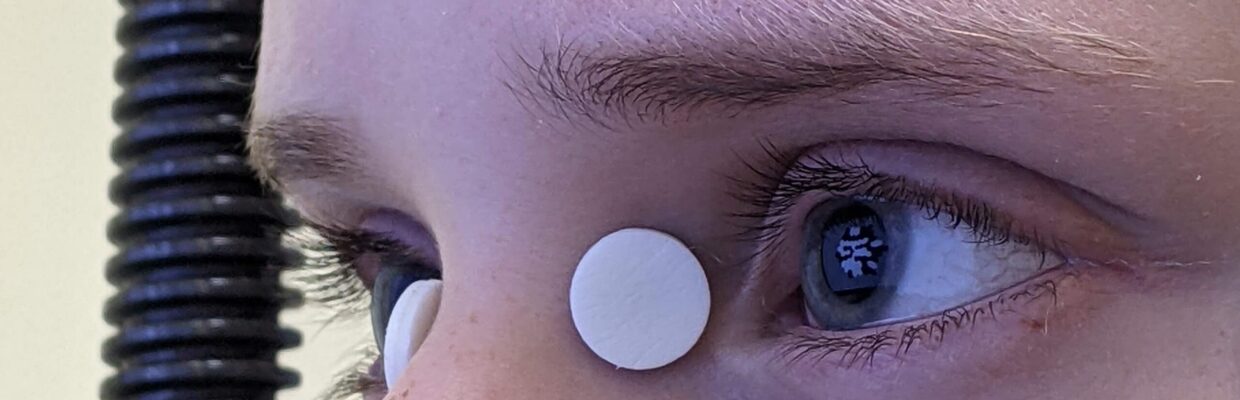
We test the structure and function of the visual pathway—the link between the eyes and brain. Sensors are attached to the skin on the head or around the eyes to record tiny electrical signals that we produce when we look at our surroundings. We use patterns on a TV screen or flashing lights to stimulate the eye allowing us to record these signals.
Our tests are non-invasive investigations of the structure, function and performance of the visual system. Non-invasive means there is no penetration of the body by injection or incision.
What are visual electrodiagnostics tests?
To record the small electrical signals we use small contacts placed on the surface of the head and near the eye. When we record activity from the back of the eye this is called an electroretinogram (ERG); when we record the activity from the brain this is called a visual evoked potential (VEP). There are different types of these tests, listed below:
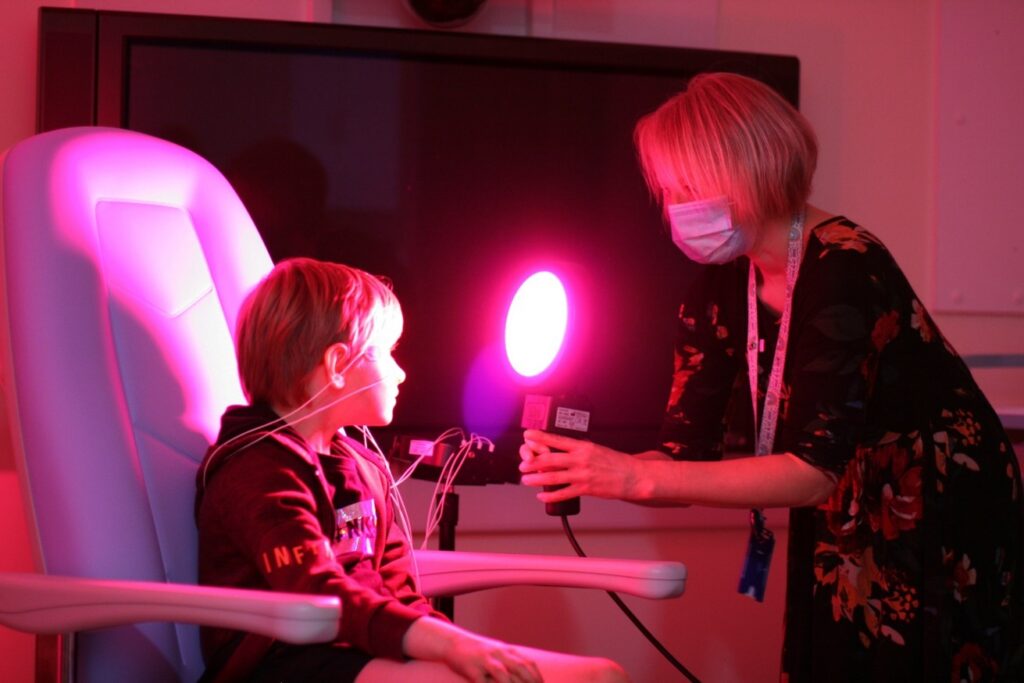
- Full-field electroretinogram (ffERG): This takes about 30 minutes and involves dilating your pupil and looking at a series of flashing lights in the light and in the dark. This tells us how the cells that respond to light are working.
- Pattern electroretinogram (PERG): This takes about 15 minutes and involves looking at a pattern on a TV screen. This tells us how the central part of the back of your eye (the macula) is working.
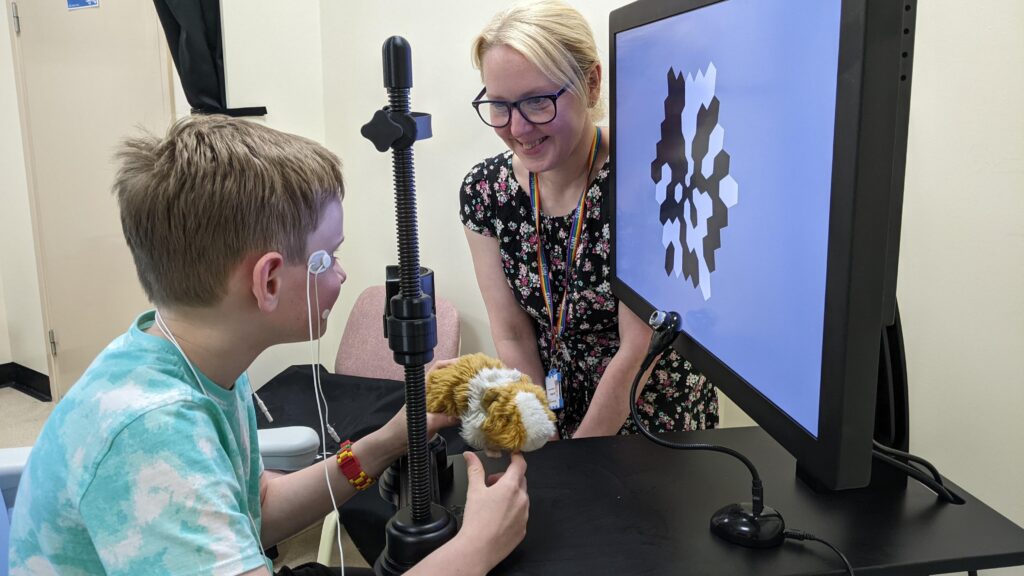
- Multifocal electroretinogram (mfERG): This takes about 15 minutes and involves dilating your pupil and looking at a fast hexagonal pattern. This gives us a map of how small areas of your macula at the back of your eye are working.
- Pattern visual evoked potential (pVEP): This takes about 30 minutes and involves looking at a checkerboard pattern on a TV. This tells us how the optic nerve, that connects your eye to your brain, is working.
- Flash visual evoked potential (fVEP): This takes about 15 minutes and involves looking at a flashing light with each eye separately. This gives us an overview of your entire visual system.
When we record any of the ERG tests we use a special type of electrode that contacts the front of your eye.
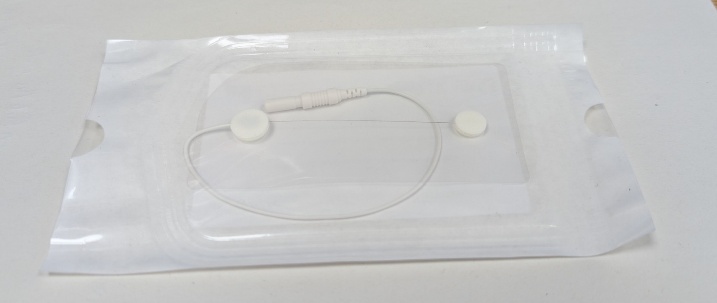
When we do these tests in young children we use a different electrode that sticks to the skin below the eye instead. We also use stickers at the sides of the eyes and on the forehead. When we record the VEP tests we place electrodes on your head with a sticky paste.
As well as these common investigations, we some more advanced tests to help us study the visual pathway in more detail. We do these tests if your symptoms need us to.
What are the risks associated with visual electrodiagnostic tests?
As with all medical procedures, there are some small risks. There is a small risk that the checkerboard pattern and flashing lights can make some feel slightly sick; this is extremely rare.
There is also a small risk that the corneal electrodes that on the lower lid could cause a corneal abrasion or a scratch; however, this is very simply avoided by not scrunching, touching or rubbing the eyes while these are in place.
The eye-drops we use may cause a slight stinging discomfort when they are first administered but this should last only a few seconds.
What are the benefits of having visual electrodiagnostic tests?
These tests may help provide a reason for the problems with your or your child’s vision or provide information about concerns around a family history of eye disease. These results could help your doctor make plans for treatment of your visual symptoms.
My appointment
What do I need to do before my appointment?
Before your appointment it is important that you wash your hair and avoid applying hair products so that we can stick the electrodes to your scalp. We cannot apply the electrodes onto a weave or a wig.
As we are applying electrodes and drops to your eyes, we advise you not to wear heavy eye make-up or false lashes as they can affect our ability to apply the electrodes.
Please bring any distance glasses you wear and your prescription (if known) to your appointment. You may find it helpful to bring sunglasses as dilating eyedrops can make your eyes sensitive to bright light.
You can take your regular medication as usual before your appointment.
What can I expect when I arrive at the unit?
When you arrive for your appointment we will take you into a private clinical room.
Newcastle Hospitals are teaching hospitals so we may have a trainee with relevant experience performing the test or a trainee or assessor observing your test. We will tell you and ask for your permission if a student is present. It is your right to decline. This will not affect your care.
A member of our team will talk you through the tests. We may ask questions about your visual symptoms and your current level of vision. Once we have explained the tests and the risks and benefits, we will then ask for your consent to proceed. If you are unsure or have any hesitation, then please ask further questions. You can stop any test at any point.
Who will I meet during my appointment?
Appropriately trained healthcare scientists or a trainee under close supervision will perform your tests. These tests can be carried out by male and female members of staff.
Where do I need to go for my appointment?
Most appointments take place at the Royal Victoria Infirmary. We also have a smaller satellite clinic at the Sunderland Specialist Eye Hospital. Your appointment letter says where your appointmentwill take place.
How can I cancel or rearrange my appointment?
If you are unwell, please do not visit if you have an infection, such as a cough, cold, diarrhoea and/or vomiting. You must be symptom free for 48 hours before visiting.
If you need to rearrange or cancel the appointment, please call our team on (0191) 28 23692.
Can I bring someone with me to my appointment?
There is space in our clinic rooms for one person to come with you to your appointment.
What do I do if I need an interpreter?
We cannot use friends or family to interpret for you. This is our Trust’s policy. We will book an interpreter for you using the information supplied by your doctor.
Please contact us if you need to rearrange your appointment so we can reschedule the interpreter or please let us know if you do not require an interpreter.
What do I do if I need to arrange hospital transport?
Ambulance transport is available to those who have a medical need. The North East Ambulance Service (NEAS) www.neas.nhs.uk can help you find out if you are eligible.
Please tell the transport service the location of your appointment stated on your appointment letter.
If your circumstances or appointment change, please rearrange your transport by contacting NEAS. If you need to cancel a booking for the next working day, please ring 0300 111 0247 as soon as possible at any time.
Patients in Northumberland, Newcastle, Sunderland, Washington, Gateshead and North and South Tyneside can request ambulance transport from NEAS: 0191 215 1515 8.00am to 6.00pm
Patients in Teesside and Darlington can contact the Transport Information Service: 01642 263 122.
Patients in County Durham can contact the Travel Response Centre on: 03000 269 999.
What happens after the tests and when do I get my results?
After the tests you may return to your normal day. However, if you have had dilating drops you may struggle to read and must not drive for approximately three to five hours.
We are not able to provide you with your results on the day. We will put together your results and send them to your consultant within four weeks. They will discuss the results with you at your next clinic appointment or write to you.
Useful information
Relevant visual conditions
The Royal National Institute for the Blind provides information on:
VED patient information leafletAccessibility
If you would like to find accessibility information for our hospitals, please visit https://www.accessable.co.uk
Feedback
If you have any feedback, suggestions or concerns, please make these known to the person doing your test or a member of our reception team.
You may also provide feedback using Newcastle Hospital’s feedback web page.
Contact Us
Visual electrodiagnostics, Medical physics
Level 2, Leazes Wing,
Royal Victoria Infirmary, Newcastle upon Tyne NE1 4LP


