


This leaflet is designed to give you an understanding of the prevention of common running injuries, the treatment that may be beneficial and some advice on what you can do to help yourself. If your symptoms persist you should seek advice from your GP or occupational health service
Running can be a good form of cardiovascular exercise which has many benefits such as:
- Reducing the risk of cardiovascular diseases.
- Improves joint health.
- Strengthens the muscles, improving their ability to work harder for longer.
- Improves memory, cognitive function and reduces stress.
If you are new to running and have any pre-existing conditions you should consult with your GP or local health service prior to commencing any running.
You should seek medical advice if any of the following applies to you:
- If you have had a fall or trauma that caused the pain.
- If your pain is constant even at rest.
- If there is significant swelling/bruising/bleeding to the area of pain.
- If you are unable to put any weight through the painful leg
Load management
Whilst running has many benefits, sometimes you can develop pain while running, most commonly associated with tissue overload.
Overload can lead to injuries such as shin splints, pain in the hip and knee joints and Achilles tendinopathy.
Commons causes of overload include:
- Returning to running after time off for example following an injury or maternity leave.
- An increase in the frequency of runs per week leading to less time for recovery.
- An increase in intensity or distance when commencing training for a race.
- A change in the type of running for example road to trail running.
- Load is how much the body has to work while running. The further or faster we run, the more load is placed on the body.
- Capacity is the body’s ability to cope with the load.
- Overload occurs when muscles and tendons are repeatedly made to work harder than they have the capacity to do so along with insufficient rest and recovery.
Correct load management, matching load to capacity will enable you to reach your performance goals while reducing your risk of injuries.
Progressive overload – the 10% rule
By slowly increasing load over a prolonged period of time the body will adapt and increase its capacity. This is called progressive overload. A good strategy to reduce the risk of injury when trying to increase running distance is to increase the distance you run by 10% each week, this allows the body time to adapt to the increased load.
There are many free running programmes available online that can help you increase load safely, normally covering a 12 week period.
The links below share examples of some of these programmes:
- British Heart Foundation has free training plans for all running levels to prepare for 5k, 10k, Half and Full distance marathons.
- Couch to 5K is a free programme for beginners to work towards 5km running.
Cross training
By incorporating alternative aerobic exercises such as crosstrainer/elliptical, swimming or cycling into your exercise routine, you can target different muscle groups and in turn enhance your running performance.
It can also help to prevent overuse injuries by resting muscles that could be overworked by repetitive running, building strength in other areas and improve cardiovascular fitness.
Periodisation
Hormones are constantly changing throughout a woman’s menstrual cycle and this can affect motivation and ability to adapt to exercise. FitrWoman is a free app designed to help women to make better decisions about exercising during their menstrual cycles.
Testing for muscle weakness or imbalances
As we have a dominant hand, we also tend to have a dominant leg. This may mean that one leg is stronger than the other. Sometimes this difference in strength may be causing the overload issues as described earlier. Below are some simple tests that can be completed at home to identify different weaknesses.
Balance
- Single leg stand
Strength
- Single leg bridge
- Single leg sit to stand from chair
- Single leg heel raises
Strength and flexibility exercises
There are several benefits for runners engaging in strength training including:
- An increase in power and speed.
- A reduction in the risk of injuries by highlighting and addressing muscle imbalances and weaknesses.
- An improvement in endurance.
The following exercises are recommended 2-3 times a week. Aim to complete 3 sets of between 3-10 repetitions unless stated otherwise.
Strength exercises
Double/single leg bridge
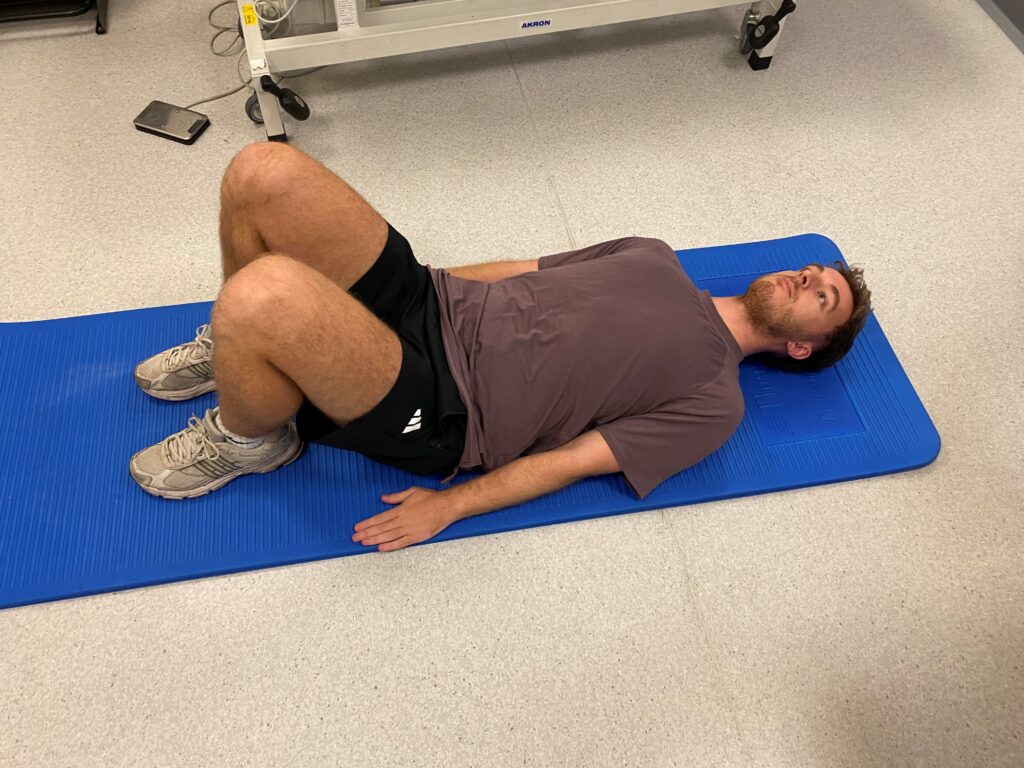
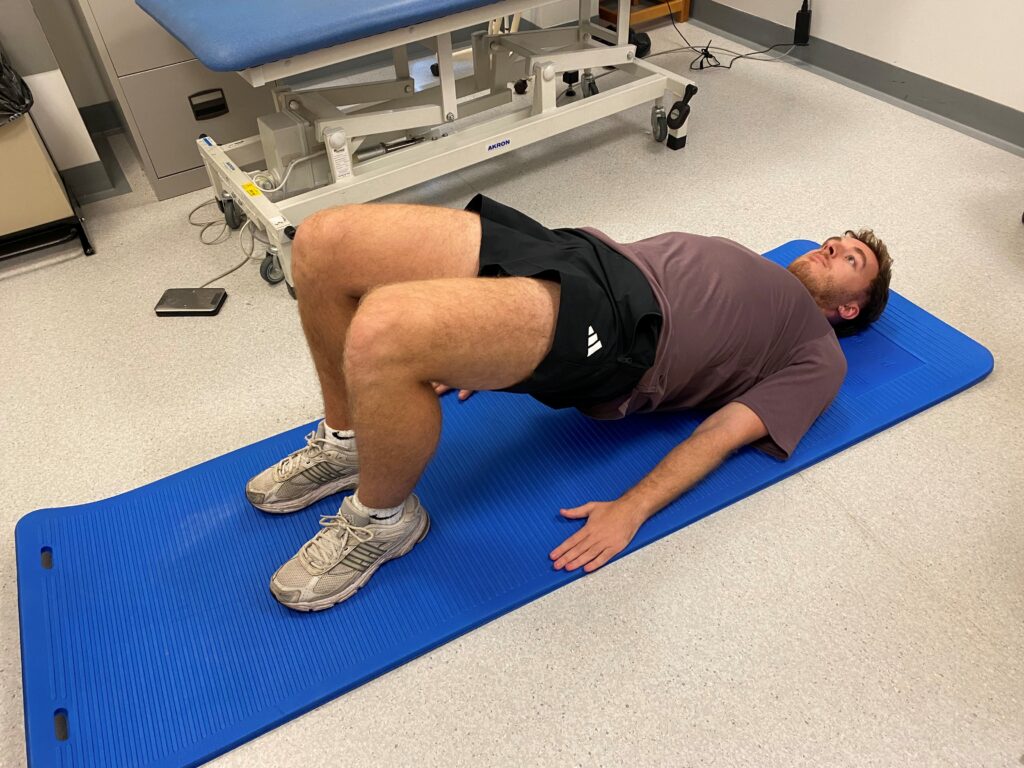
Lie on your back with your knees bent and feet flat on the floor. Cross your arms over your chest or rest them on the floor by your side. Tighten your buttock muscles and slowly raise your buttocks off the floor. Slowly return to the starting position.
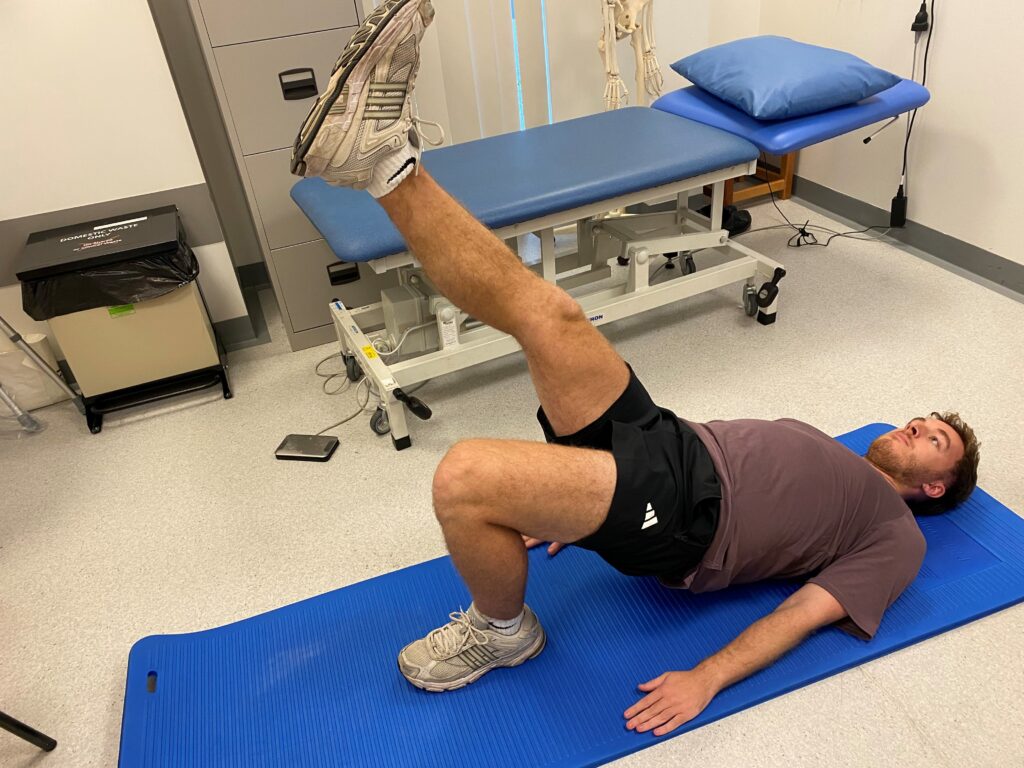
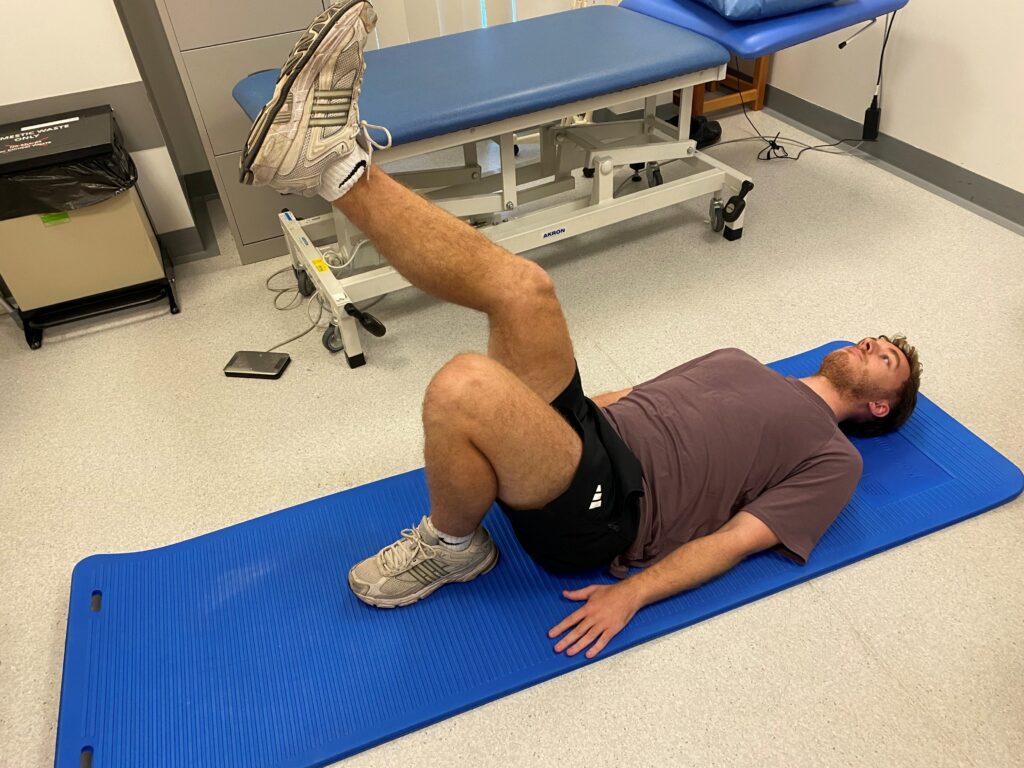
Progress to single leg bridge as able by keeping one leg raised during the exercise.
Dead bug
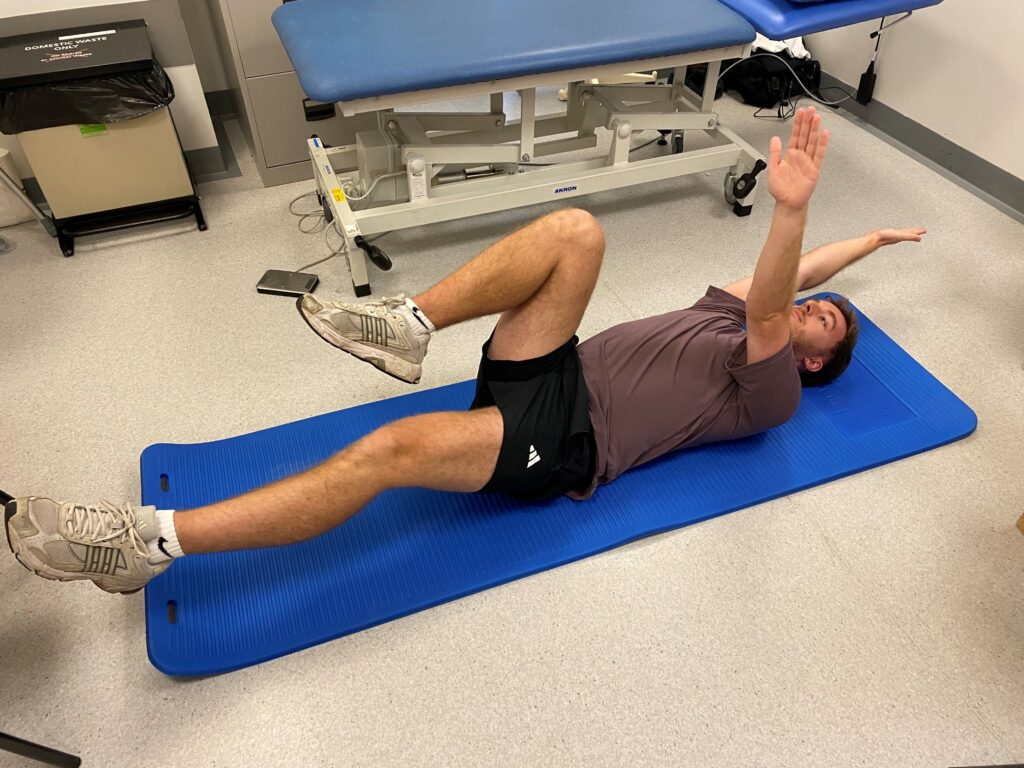
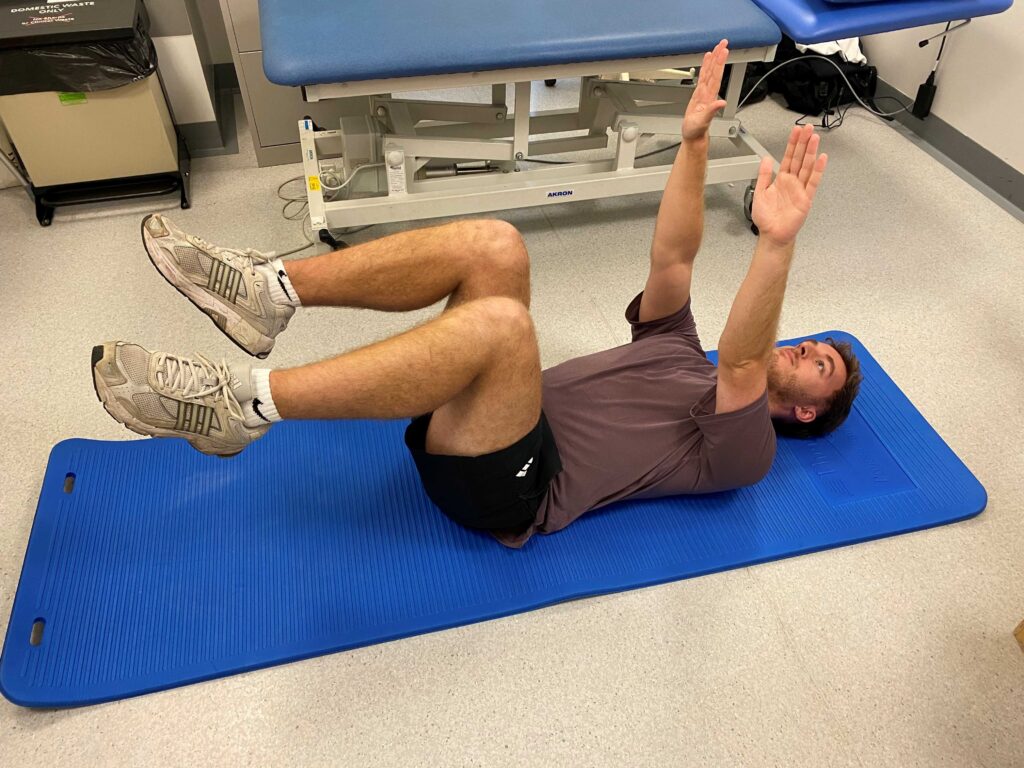
Lie on your back with your hips and knees bent to 90 degrees and arms out straight with your fingertips pointing to the ceiling. Keeping your back flat, lower your left arm and right leg away from one another towards the floor. Do not allow anything else to move making sure your back stays flat against the floor. Return to the starting position and repeat with the opposite arm and leg.
Forward plank
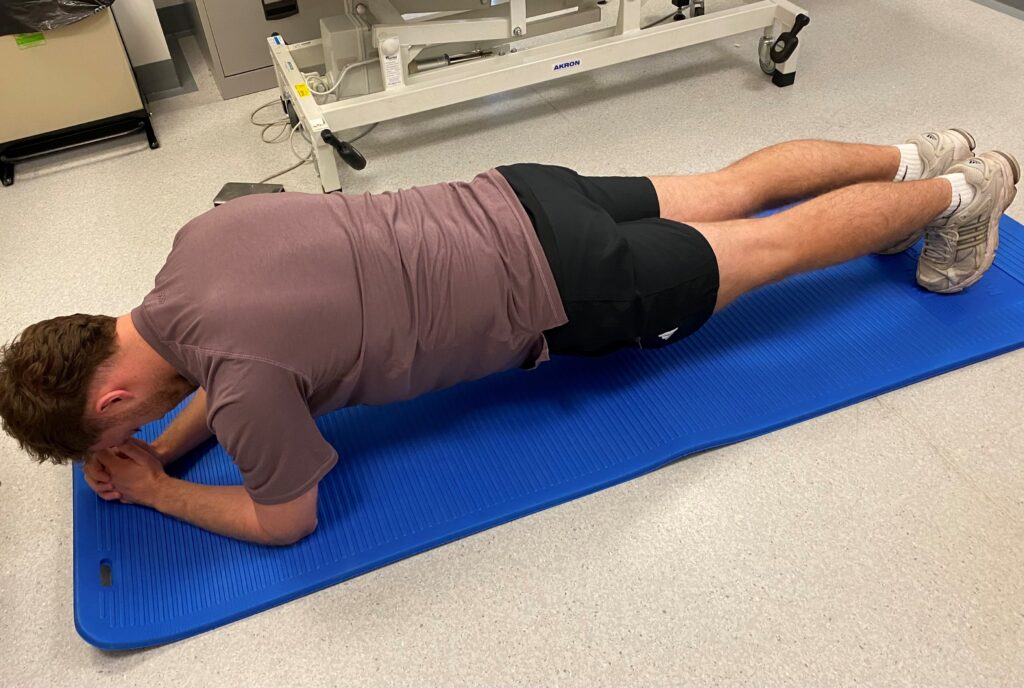
On the floor, rest on your forearms and toes with your body in a neutral alignment. Hold for 15-60 secs. Repeat 2-3 times.
Forward lunge
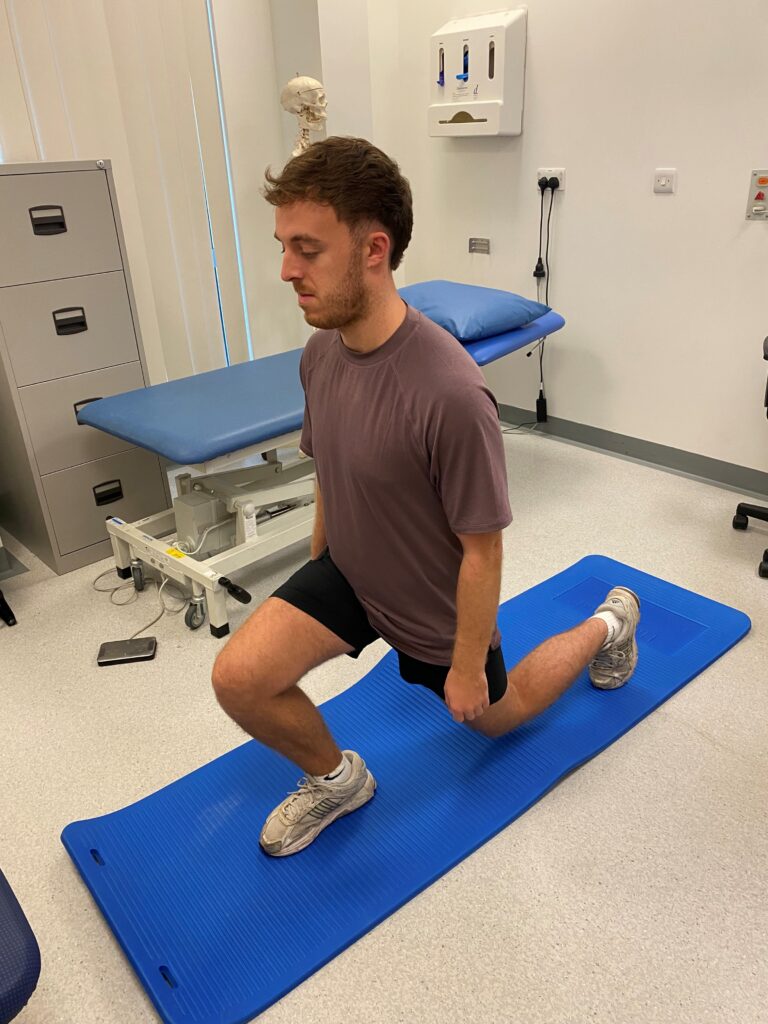
Stand feet hip-width apart. Take a large step forward and squat down so that your back knee touches the floor. Keep your upper body straight. Stand back up pushing through your front foot to bring it back to the starting position.
Single leg deadlift
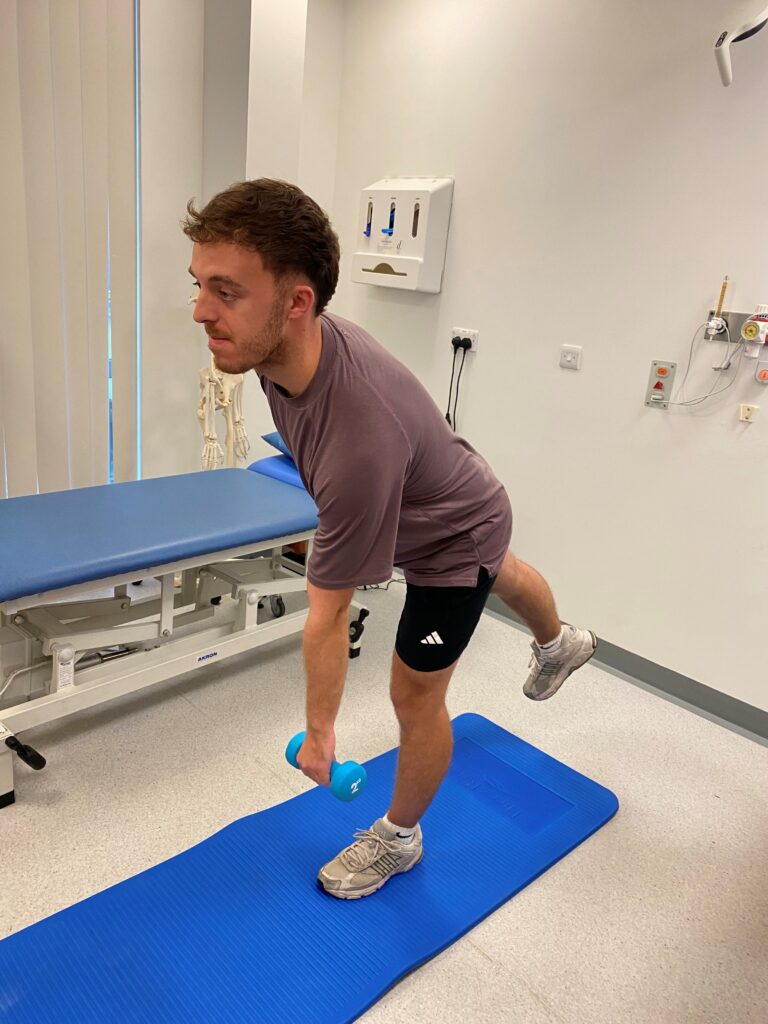
Stand with your knees slightly bent, holding a dumbbell in one hand. Hinge forward at the waist and fully extend the opposite leg out to the rear, lowering the dumbbell towards the floor. Keep your back straight and do not allow your body to rotate. Return to a standing position.
Single leg heel raise 1
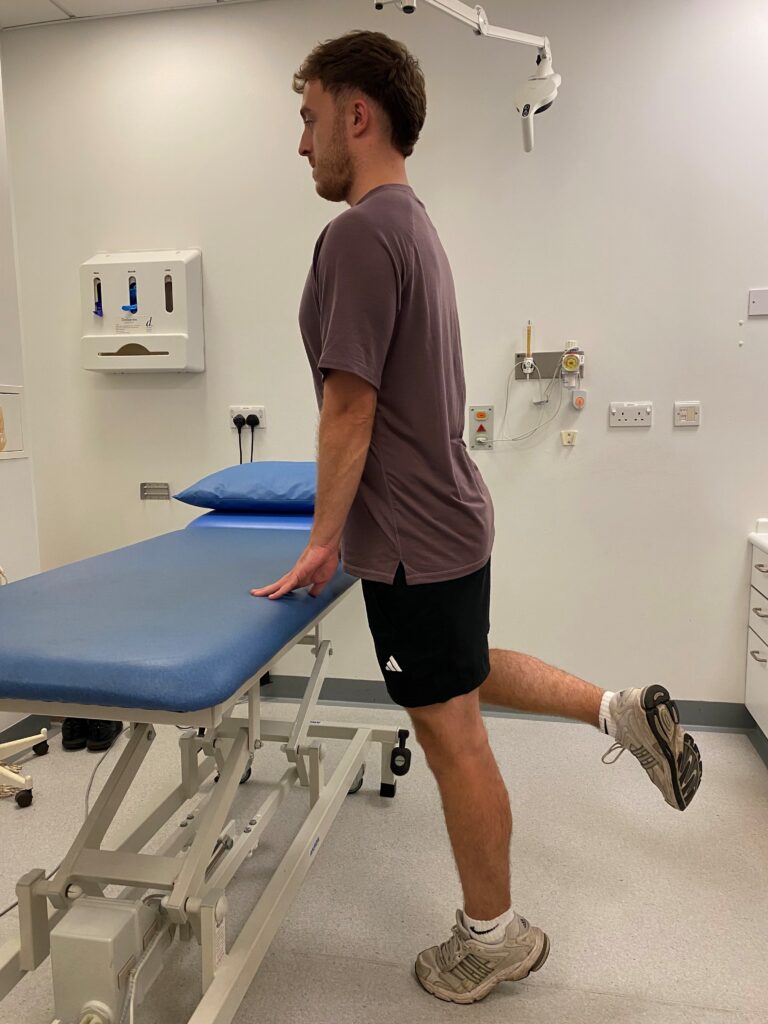
Stand on one leg holding onto a table/kitchen worktop. Slowly rise up on to your toes. Slowly lower your heel back down.
Single leg heel raise 2
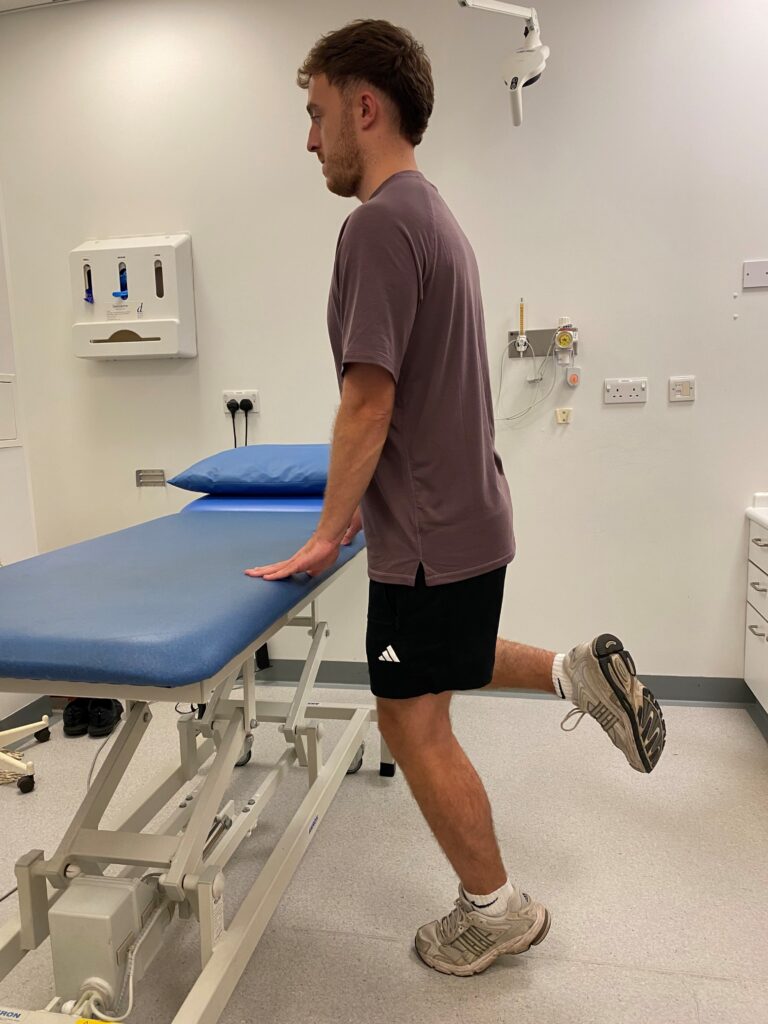
Stand on one leg with a slight bend in your knee. Slowly rise up onto your toes while keeping the bend in your knee. Slowly lower your heel back down.
Squat
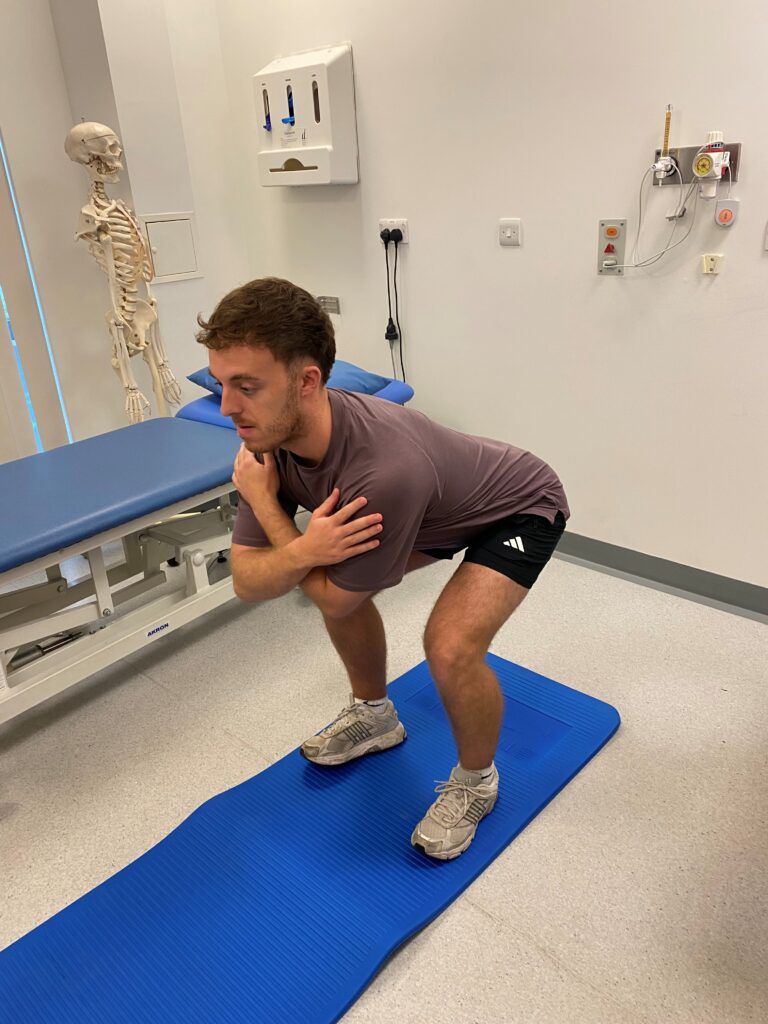
Standing with feet hip width apart. Bending at the knees and hips lower your body as if sitting down into a chair, pushing your hips backwards. Ensure your knees do not move forward beyond your toes. Return to the start position.

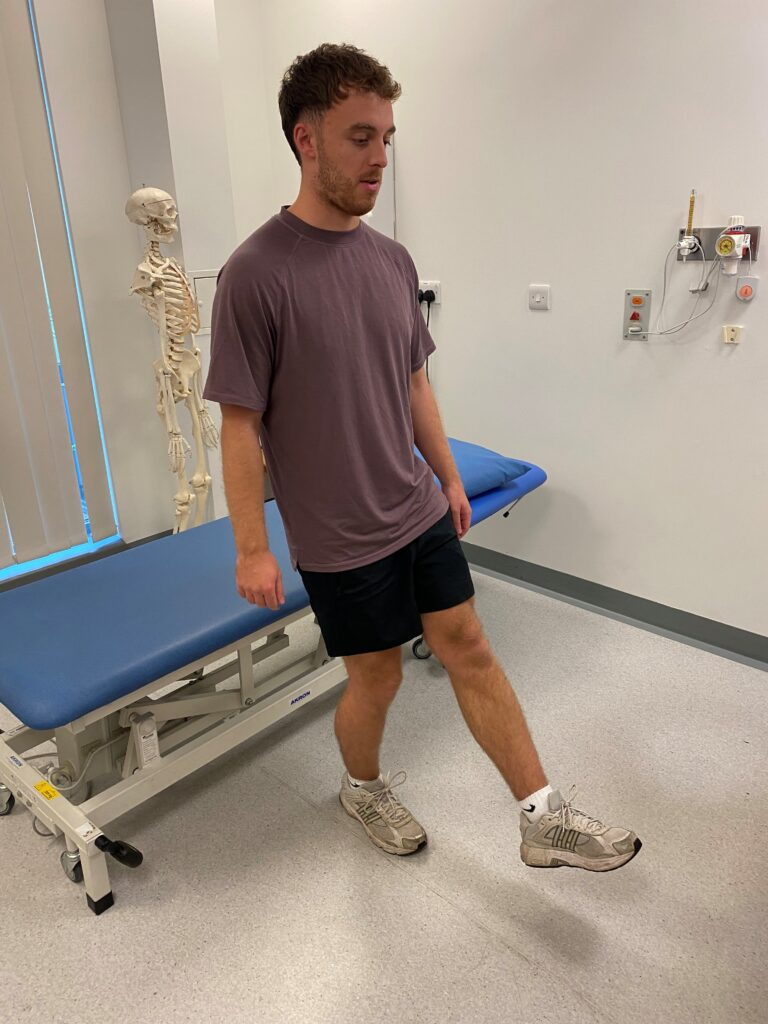
Stand in front of a chair/bed. Raise one leg in front of you keeping it straight. Bend the knee of your standing leg and lean forward to sit down into the chair whilst keeping the raised leg off the ground. Slowly push through your foot to return to a standing position.
Flexibility exercises
Fire hydrants
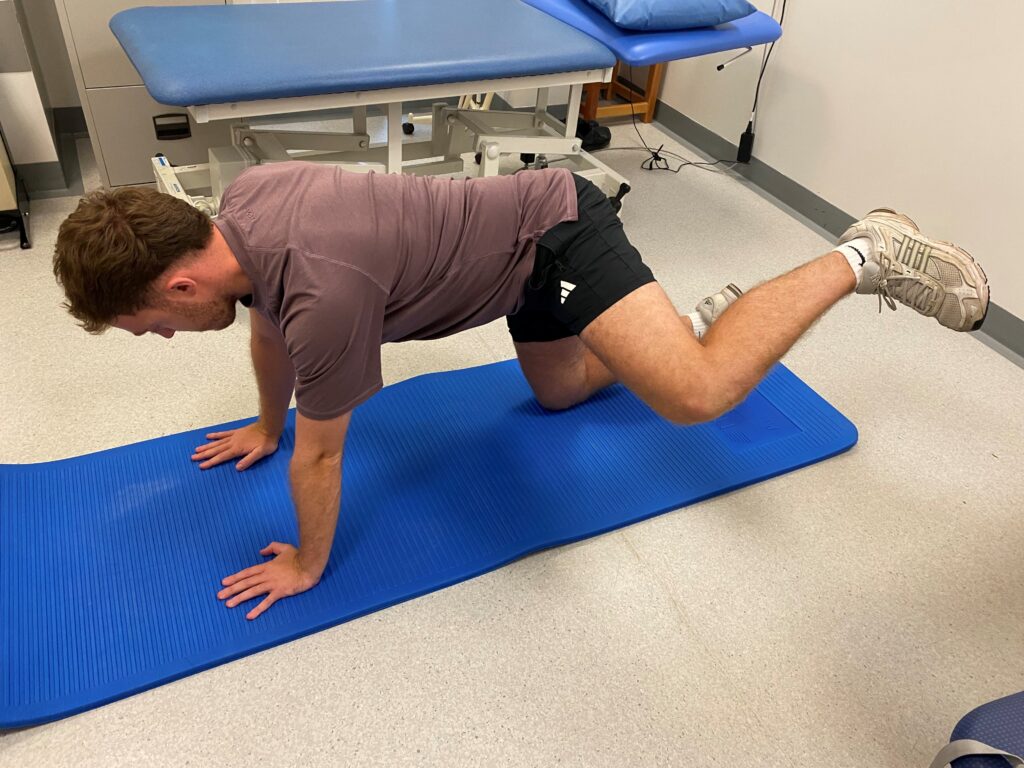
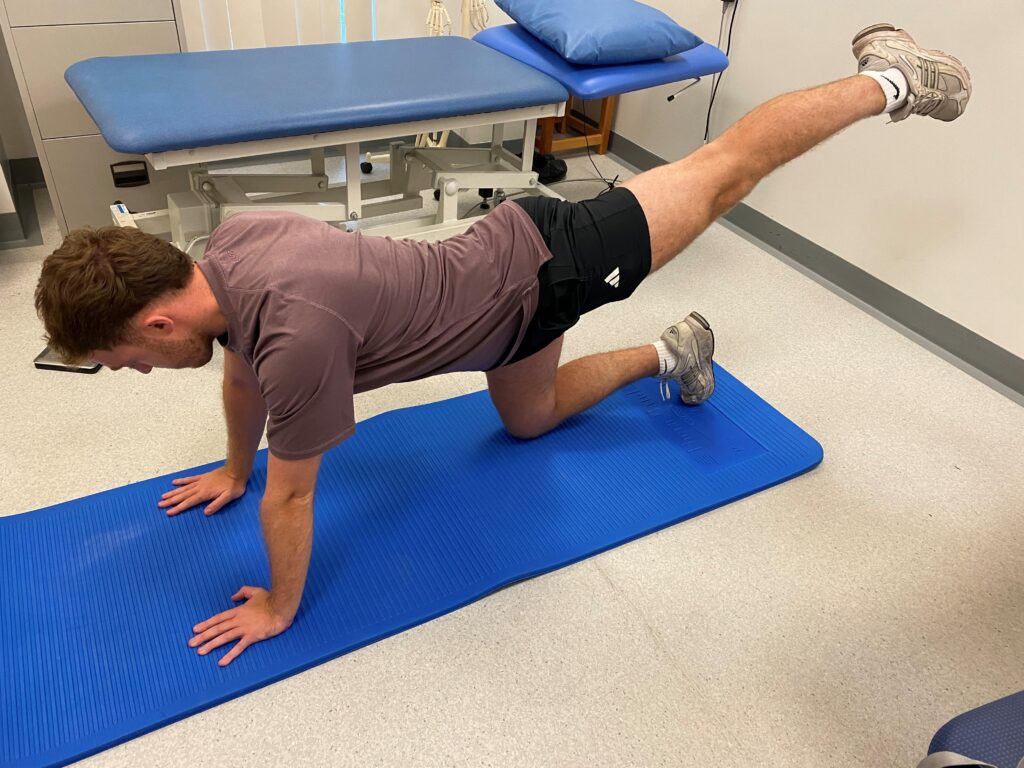
Start on your hands and knees. Tighten your abdominal muscles and keep your back straight. Lift one knee up to the side. Then straighten the leg backwards and bring back to starting position.
Calf stretch 1
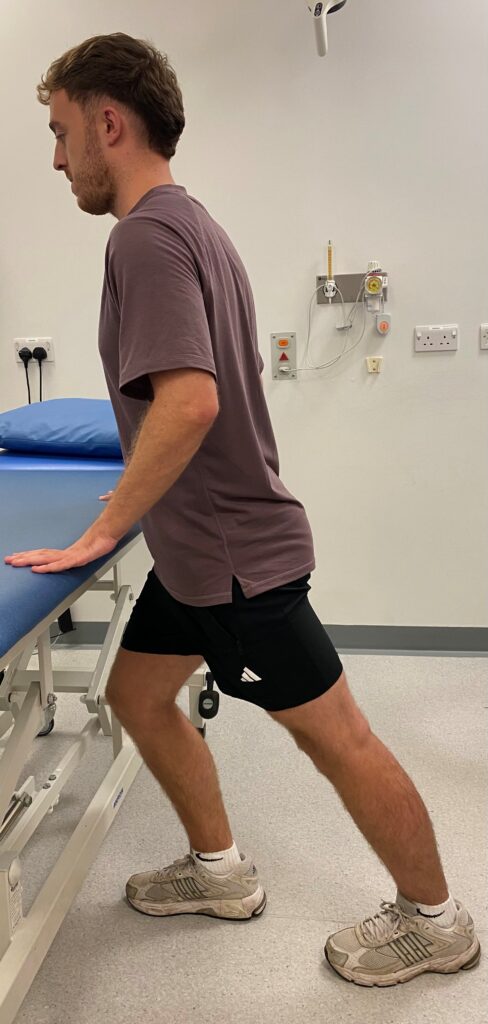
Hold onto a table/kitchen worktop for support. Start in a walking stance with the leg to be stretched straight out behind you and the other leg in front of you with your front knee bent.
Lean your body forwards until you feel the stretch in the calf of the back leg.
Hold for approximately 20 secs. Repeat 3 times.
Calf stretch 2
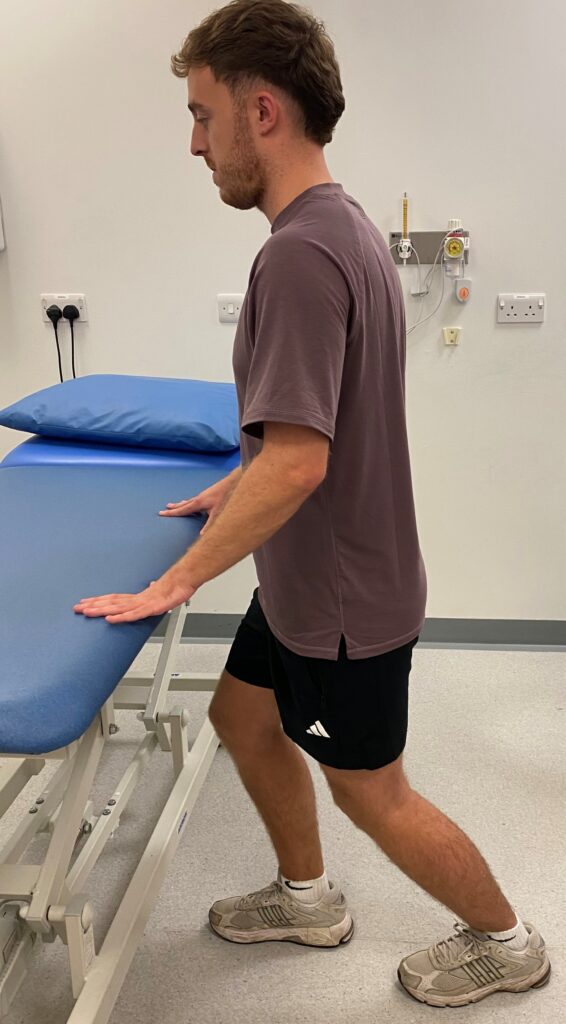
Hold onto a table/kitchen worktop for support. Start in a walking stance with the leg to be stretched straight out behind you and the other leg in front of you. Bend both knees. Lean your body forwards until you feel the stretch in the calf of the back leg. Hold for approximately 20 secs. Repeat 3 times.
Hamstring stretch in sitting
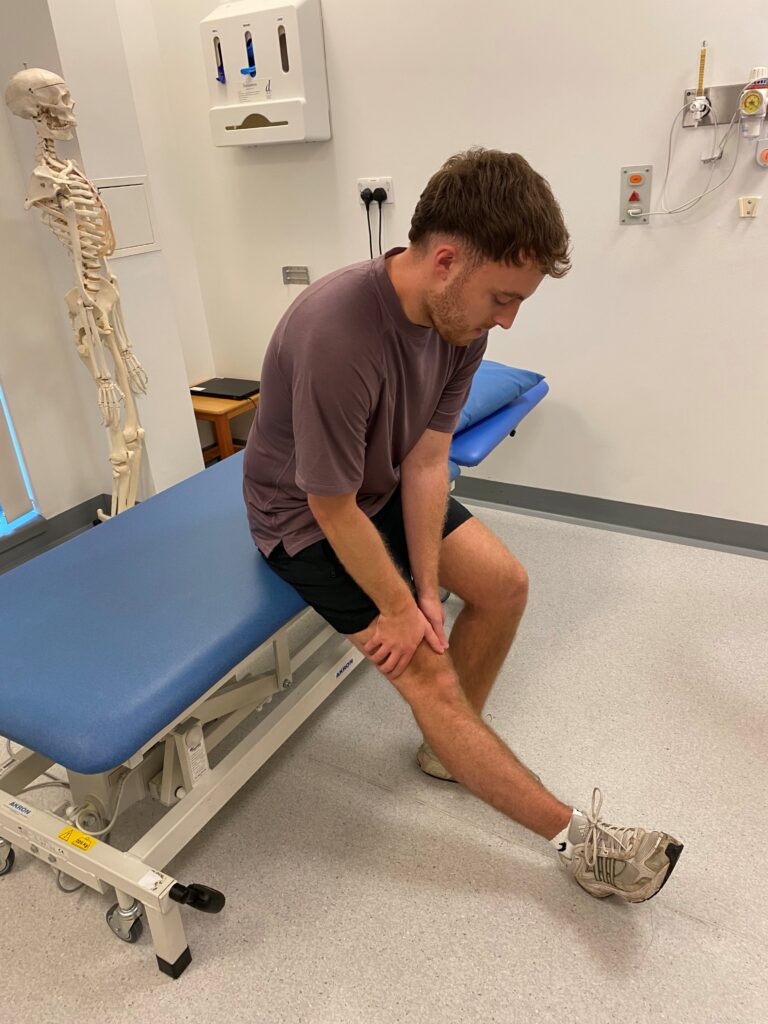
Sit with you leg straight in front of you. Place your hands on your thighs. Bend your upper body forward until you feel a stretch in your hamstring (back of your thigh).
Hold for approximately 20 secs. Repeat 3 times.
Running specific exercises
- Running skips.
- High knee jogging on the spot.
- Fast step ups.
What about work?
Maintaining all normal activities including work improves your chance of recovery by keeping you moving. This helps you keep your ‘work fitness’ and prevents your body getting weak, which can prolong your pain.
Remember: You do not have to be pain free to return to or remain at work.
It may be necessary to do temporary lighter or modified duties. This should be discussed with your line manager initially. If further clarification is needed your Occupational Health advisor can identify more specific role modifications.
What should I do if I am still experiencing problems?
If you are unable to agree on restricted roles with you manager or you are still having problems (despite following this advice): your Occupational Health team can help. The Occupational Health team can advise you on how to bridge the gap to help you return to normal activities. You can also gain access to the Occupational Health physiotherapy team by:
Self-referral
The occupational health physiotherapy team can assist in the management of musculoskeletal problems that affect your ability to work.
Management referral
If you feel your symptoms are having a significant effect on your ability to carry out your role, discuss this with your manager and request a referral to the occupational health service.
Contact
Physiotherapy team
Ground Floor
Regent Centre
Regent farm road
Gosforth
NE3 3HD


