Cookie settings

We use some essential cookies to make this website work. We’d like to set additional cookies to understand how you use newcastle-hospitals.nhs.uk, remember your settings and improve our services. We also use cookies set by other sites to help us deliver content from their services.
View cookies
You have accepted additional cookies. You can change your cookie settings at any time.
You have rejected additional cookies. You can change your cookie settings at any time.
Skip navigation
Newcastle Hospitals NHS Foundation Trust logo Newcastle Hospitals NHS Foundation Trust logo
  • Contact
  • News
  • Jobs
  • Private healthcare
  • Events
  • Donate
Use this link to enable the ReciteMe accessibility toolkit Enable ReciteMe accessibility tools
Use this link to enable the ReciteMe accessibility toolkit

Accessibility tools

Enable ReciteMe accessibility tools
  • Home
  • Hospitals and locations

    Hospitals

    • Royal Victoria Infirmary
    • Great North Children’s Hospital
    • Freeman Hospital
    • Our other locations

    Directions to the Royal Victoria Infirmary

  • Patients and visitors

    Patients and visitors

    • Getting to hospital
    • Your stay in hospital
    • Visiting our hospitals
    • Rearrange or cancel appointments
    • Your outpatient appointment
    • Planning for discharge together
    • Video appointments
    • Patient information resources
    • Discharge lounges
    • Do you still need to see us?
    • Accessibility and disability support
    • Privacy and dignity
    • Support for carers
    • Bereavement
    • Chaplaincy service
    • Tell us about your experience
    • Overseas visitors
    • Secure online payments
  • Services

    Services

    Select from the list below to jump to Services that begin with that letter.

    A
    B
    C
    D
    E
    F
    G
    H
    I
    J
    K
    L
    M
    N
    O
    P
    Q
    R
    S
    T
    U
    V
    W
    X
    Y
    Z
    View all Services
  • Staff

    Staff

    • Consultants
    • Nurse consultants
    • Board of directors
    • Staff intranet
  • Home
  • Hospitals

    • Royal Victoria Infirmary
    • Great North Children’s Hospital
    • Freeman Hospital
    • Our other locations

    Directions to the Royal Victoria Infirmary

    Browse Hospitals and locations
  • Patients and visitors

    • Getting to hospital
    • Your stay in hospital
    • Visiting our hospitals
    • Rearrange or cancel appointments
    • Your outpatient appointment
    • Planning for discharge together
    • Video appointments
    • Patient information resources
    • Discharge lounges
    • Do you still need to see us?
    • Accessibility and disability support
    • Privacy and dignity
    • Support for carers
    • Bereavement
    • Chaplaincy service
    • Tell us about your experience
    • Overseas visitors
    • Secure online payments
    Browse Patients and visitors
  • Services

    Select from the list below to jump to Services that begin with that letter.

    A
    B
    C
    D
    E
    F
    G
    H
    I
    J
    K
    L
    M
    N
    O
    P
    Q
    R
    S
    T
    U
    V
    W
    X
    Y
    Z
    View all Services
    Browse Services
  • Staff

    • Consultants
    • Nurse consultants
    • Board of directors
    • Staff intranet
    Browse Staff
  • Contact
  • News
  • Jobs
  • Private healthcare
  • Events
  • Donate
Home > About Newcastle Hospitals > Information leaflets and helpful resources > Emollients

Emollients

On this page

  1. What are emollients?
  2. How do emollients work?
  3. How much emollient is enough?
  4. Precautions
  5. How should emollients be applied?
  6. Useful sources of information
  7. For further information

What are emollients?

Emollients (moisturisers) increase the level of moisture in the skin, making it less dry. There are lots of different types including lotions, creams, gels and ointments. Dermatologists tend to prefer ointments because they are thick, greasy and last longer on the skin and contain fewer preservatives, which can cause stinging and irritation.

How do emollients work?

Emollients provide a coating on the outer layer of the skin, improving the skin barrier and reducing water loss. You might use a number of different emollients for example greasier ointments can be used if the skin is very dry or you are relaxing at home but you might choose a cream-based emollient if your skin is not very dry or you are going to school/work, etc.

The vast majority of emollients can be used as a soap substitute as well (except white soft paraffin). Regular soaps including shower gel and bath foam should be avoided as they can be very drying on the skin and cause irritation.

How much emollient is enough?

A thin shiny layer on the skin should be sufficient for all the affected areas. If treating the whole body, approximately 600g per week for an adult and 250-500g per week for a child.

Precautions

  • Some emollients contain paraffin, which is flammable. Do not smoke, use naked flames (e.g. candles, BBQs, be near people who are smoking or using naked flames) or be near anything else which may cause a fire whilst these products are in contact with your skin, clothes, dressings or bandages.
  • Emollients will cause surfaces such as baths and showers to be slippery, so take care.
  • If an emollient causes irritation, please seek advice from your medical or nursing team.
  • If you are using a topical corticosteroid as part of your treatment plan, also do not apply this at the same time, as it may dilute your treatment and cause it not to work effectively. An emollient should be applied 30 minutes prior to applying a steroid or vice versa.
  • If you are having ultraviolet light treatment or radiotherapy, check with your medical and nursing team if there is any specific guidance on your emollient use prior to starting treatment.
  • Emollients do not contain SPF and should not be used as sun protection. Sun creams should be used as an alternative when skin is exposed to direct sunlight with a medium/high UV level.

How should emollients be applied?

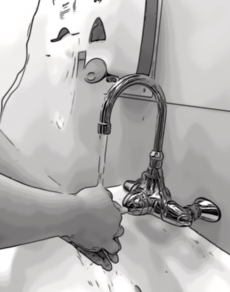
Step 1  
Always wash your hands for 20 seconds before applying an emollient.
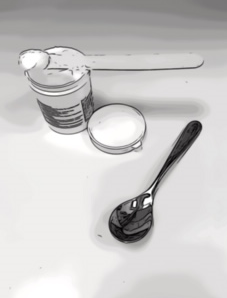
Step 2
Do not put your fingers into the tub as this can introduce bacteria and cause infection. Use a clean spoon or a spatula to take your emollient out of the tub.   If your emollient is in a pump this can be done straight on to your clean hands.
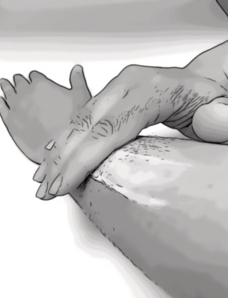
Step 3
Apply to the skin in a downwards motion following the hair growth. Do not rub in as this can block the follicles and cause infection

Top tips for emollients

  1. As a moisturiser

Smooth onto the skin immediately after bathing and apply as often as needed to prevent the skin becoming dry.

Ideally it should be applied 2-4 times per day.

  1. As a cleanser

Apply liberally to the skin and wipe off with single layer of paper tissue, taking care not to damage fragile skin.

  1. As a soap substitute

Mix emollient with water in palm to form lather. Apply to the skin in a downwards direction. Gently rinse lather off skin leaving a thin layer of the ointment on the skin. Pat dry.

  1. In the bath

Ointments can be dissolved in water. Dissolve a spoonful of ointment in a small amount of warm water and add to the bath water. Take care when getting out of the bath, as it may be slippy.

Useful sources of information

  • British Association of Dermatologists (BAD)
  • DermNet NZ

For further information

Contact

For further information, you can contact the dermatology service.

0191 282 0098

Monday to Friday, 9am – 4pm (excluding Bank Holidays).

Medicines information patient helpline

Our medicines information helpline is for Newcastle Hospitals patients to answer questions they may have regarding their medicines.

Feedback or concerns

If you have any concerns during your treatment please discuss this with the dermatology team.

The Patient Advice and Liaison Service (PALS) can offer on-the-spot advice and information about the NHS. You can contact them on Freephone 0800 032 02 02 or e-mail [email protected]

Page last updated: 10/11/2026

Share this page on

  • Twitter logo
  • Facebook logo
  • Email icon

Audience: Patients

Topic: Dermatology

Type: Patient information leaflets

Follow us on social media for all the latest news and announcements

  • Find us on Facebook
  • Find us on Twitter
  • Find us on Instagram
  • Find us on LinkedIn
  • Find us on YouTube

Services

For service details please visit the relevant service page.

Commercial

Commercial opportunities to work with Newcastle Hospitals.

Hospitals

For hospital details please visit the relevant location.

Jobs

Careers information and current job vacancies.

  • Contact
  • Information leaflets and helpful resources
  • Freedom of information
  • Media enquiries
  • Accessibility
  • Privacy notice
  • Cookies
  • Terms and conditions

Copyright © 2026 Newcastle upon Tyne Hospitals NHS Foundation Trust.

Lovingly crafted by Mixd