

A transplant recipient is sharing her story during Organ Donation Week to encourage people to talk about organ donation with their loved ones.
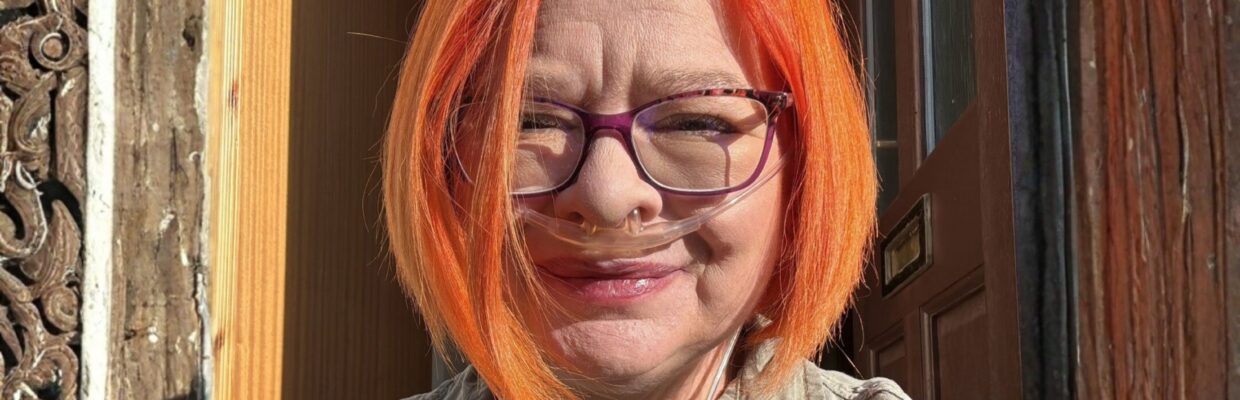
Thea Macalpine, 52, who lives in the Scottish Borders, received a double lung transplant at Newcastle Hospitals after spending four years on the waiting list for a suitable donor.
Born with cystic fibrosis, Thea led an active childhood and, for many years, managed her condition well. However, at the age of 29 she began experiencing recurring chest infections, often requiring antibiotic treatment and hospital admissions.
Over time, her health deteriorated and six years ago increasing breathlessness and a severe chest infection led to a diagnosis of pulmonary hypertension, a condition that causes high blood pressure in the blood vessels that supply the lungs. As the condition progressed, Thea became dependent on oxygen and found it increasingly difficult to carry out everyday activities.
At the time, she was working full-time for a software company in a role that involved frequent travel. Although home working during the Covid-19 pandemic enabled her to continue working, her health continued to worsen.
Thea was referred to the specialist cardiothoracic transplant team at Newcastle’s Freeman Hospital and placed on the waiting list for a lung transplant.
Throughout her treatment, Thea was cared for through a partnership of specialist services across Scotland and Newcastle. She received ongoing support from the cystic fibrosis team at the Western General Hospital in Edinburgh and the specialist pulmonary hypertension team in Glasgow’s Golden Jubilee National Hospital, while also being assessed regularly by the Freeman Hospital lung transplant team through both specialist clinics in Edinburgh and at the Freeman Hospital in Newcastle.
However, finding a suitable donor proved challenging. Standing 5ft tall, Thea required smaller donor lungs, which meant she faced a wait of four years before a suitable match became available.
When suitable donor lungs were identified, they were assessed using ex vivo lung perfusion (EVLP) at the Newcastle Organ Assessment Hub (NOAH). EVLP is an advanced technique that allows donor lungs to be evaluated and supported outside the body before transplantation. The process can increase the number of lungs available for transplant by enabling specialist teams to assess organs that may otherwise not have been used.
Thea’s transplant was successful and has transformed her quality of life. Today, she enjoys regular walks, attends the gym and is working with a personal trainer to rebuild her strength and fitness. She is looking forward to travelling abroad again and hopes to return to work in the future.
Dr Gerard Meachery, consultant in respiratory and transplant medicine and joint director of the Cardiothoracic Transplant Programme at Newcastle Hospitals, said: “Organ donation saves and transforms lives, and Thea’s story is a powerful example of the difference it can make. We are incredibly grateful to her donor and their family for their generosity. We would also like to recognise the contribution of the many teams involved in her care, including colleagues in Edinburgh, Glasgow and Newcastle, whose close partnership and specialist expertise helped support Thea throughout her transplant journey. It is wonderful to see her enjoying life again following her transplant.”
Reflecting on her transplant journey, Thea said: “It was the gift of life. I can’t thank my donor family enough. Their sacrifice and generosity have given me my life back.”
Anthony Clarkson, Director of Organ and Tissue Donation and Transplantation at NHS Blood and Transplant, said:
“We are facing one of the most challenging periods for organ donation in over a decade. The sharp decline in donors and the rising number of people waiting for a transplant need urgent action. We have already adapted significantly to changes in the donation environment. But. Saving lives and reducing the waiting list needs collective effort across the NHS and society.
“There is a simple action the public can take to help save lives. Please sign the NHS Organ Donor Register. Most of us would accept an organ if we needed one but opportunities to save lives are being lost because families didn’t know what their loved ones wanted. Leave them certain.
“It takes two minutes to confirm an organ donation decision on the NHS Organ Donor Register. Each donor can potentially save up to nine lives. Visit organdonation.nhs.uk, call 0300 123 23, or use the NHS App.”
Organ Donation Week is taking place from 21 to 27 September and raises awareness of the importance of organ donation and the conversations families should have about their wishes.
Thousands of people across the UK are currently waiting for a life-saving transplant. Thea hopes that by sharing her experience, more people will consider discussing organ donation with their loved ones and making their decision known.


