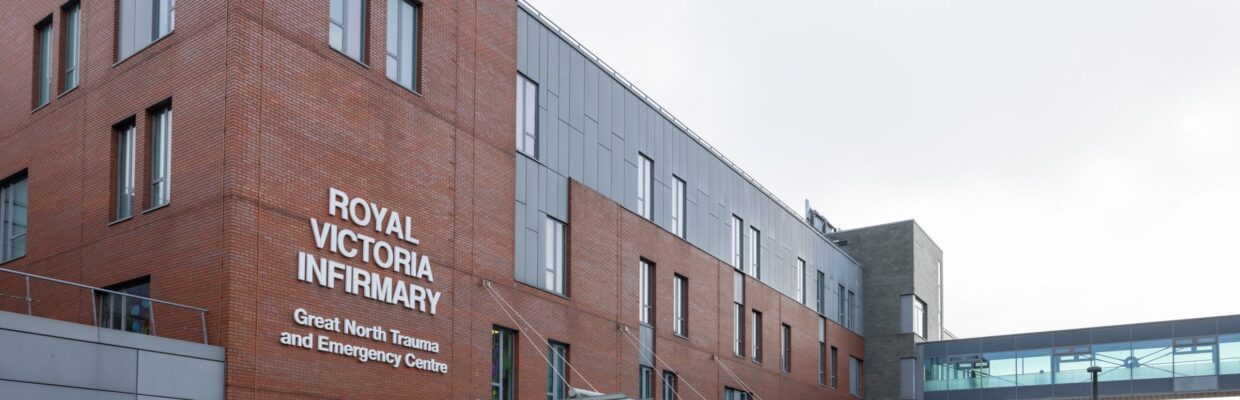


Testing for blood-borne viruses (BBV) at Newcastle’s Royal Victoria Infirmary’s emergency department has helped identify 89 people, who were previously unaware they were carrying one of the viruses, enabling them to access specialist care, treatment, and support.
Introduced as part of a national programme to help stop transmission of HIV and eradicate Hepatitis C, the emergency department has carried out nearly 32,000 blood borne virus tests since March 2025.
The test is conducted on an opt-out basis and looks for 3 infections – HIV, Hepatitis B and Hepatitis C – all of which can remain silent for many years and cause serious health problems if left untreated.
There are now highly effective medical treatments for all 3 infections. Hepatitis C can be cured, and HIV and Hepatitis B can be controlled, meaning they are no longer life-limiting.
Consultant in infectious diseases and general internal medicine at Newcastle Hospitals, Dr Ashley Price said: “Many of these patients had never been tested before and may not have accessed testing in any other setting. Now, they are being connected to specialist care and treatment, giving them the best chance of a healthier, longer life.
“This has been an amazing collaboration across teams and the emergency department. Thanks to the hard work and dedication of colleagues, we are already seeing a significant impact – transforming lives and reducing the risk of onward transmission.”
Dr Claire Fuller, NHS England national medical director, said: “The rollout of blood-borne virus testing in NHS emergency departments has been a gamechanger for the early detection of HIV and viral hepatitis – enabling thousands more people to get access to life-saving treatments, which prevent long-term health issues and reduce the chance of passing the viruses on to others.”
“This builds on testing already routinely available through GPs and sexual health services across England and is a great example of the NHS making every contact with patients count, helping people to stay well, avoid illness and saving lives.”
Information on the programme is displayed throughout the emergency department and can also be found on the trust’s website including a frequently asked questions section.
Newcastle Hospitals has been awarded a charter of official recognition as an HIV Confident organisation. The charter aims to tackle HIV-related stigma and discrimination in the workplace, making sure that patients and staff living with HIV know that they can access services – or work for the organisation – with confidence and without fear of discrimination.
HIV Confident was set up in response to the Government’s HIV action plan to eliminate new HIV transmissions by 2030.
The NHS national testing programme has carried out 12 million blood-borne virus tests to people attending emergency departments across the country, which has led to over 11,000 people receiving a new diagnosis.
Working alongside South Tees Hospitals NHS Foundation Trust, Newcastle’s opt-out testing programme will soon pilot the introduction of syphilis testing.
The national HIV action plan published by the Department of Health and Social Care has committed to ending HIV transmissions in England by 2030.