


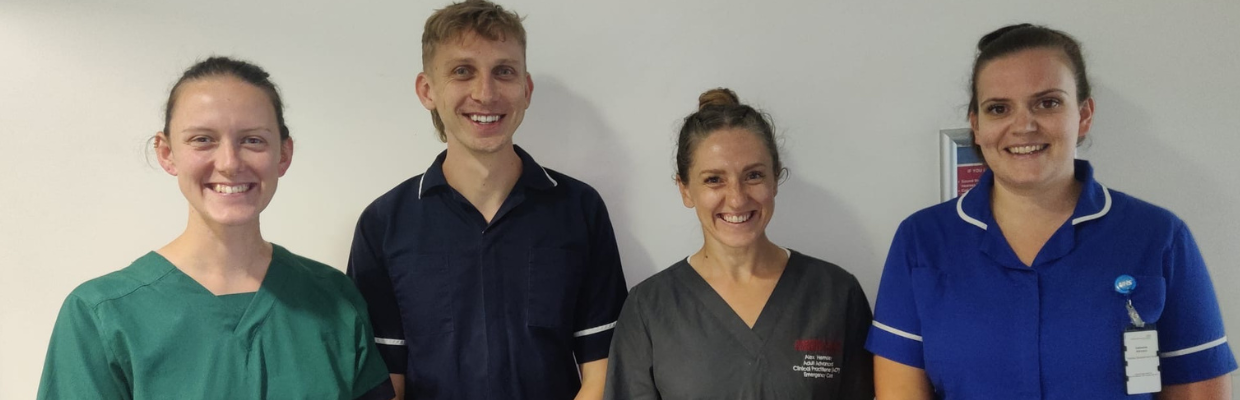
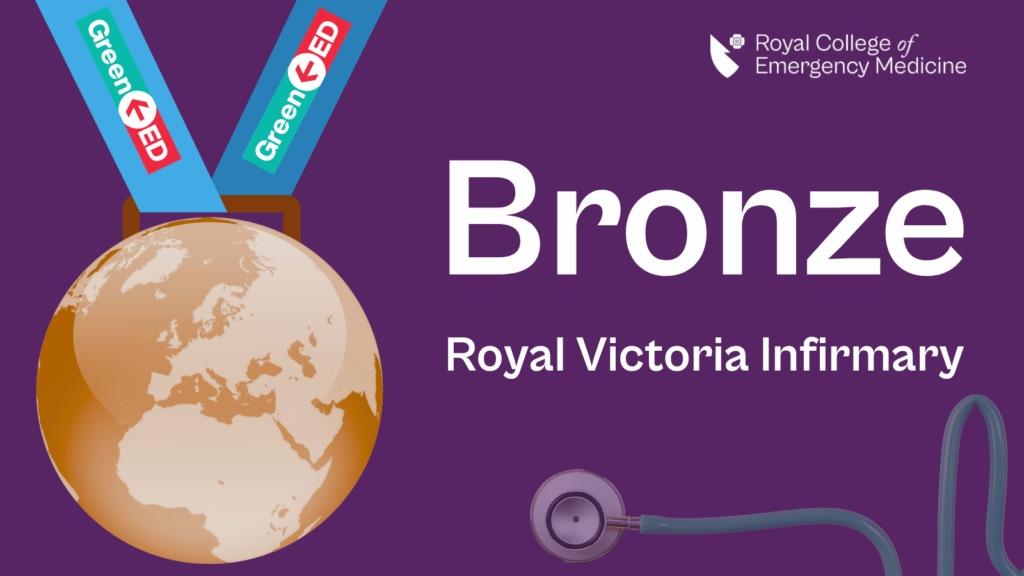
Newcastle Hospitals’ emergency department at the Royal Victoria Infirmary (RVI) has been awarded bronze status by the Royal College of Emergency Medicine’s (RCEM) GreenED programme, in recognition of its commitment to environmental sustainability.
The GreenED programme aims to measure and reduce the environmental impact of emergency departments to drive sustainable practices across emergency medicine.
The bronze award recognises emergency departments that have embedded sustainable practices across areas including waste reduction, medicines, energy use, staff engagement, and patient care.
Reducing environmental impact
Over the past two years, the emergency department has introduced a wide range of initiatives to reduce its environmental impact and embed sustainability into everyday practice. Initiatives have included:
- Removing 95,000 single-use items from clinical waste by stopping the use of disposable silver trays.
- Moved from paper to online documents, saving nearly 12,000 sheets of printed paper.
- Grey-top blood collection bottles, used to measure glucose and lactate levels, have been reduced from 600 per week to only 60, with a predicted saving of £19,000.
- Metered dose inhalers reduced and replaced, where possible, with dry powder inhalers, which produce 18-40 times less carbon emissions.
- Sustainability is now included in staff inductions and supported by regular awareness campaigns, staff surveys and opportunities for both colleagues and patients to suggest further improvements.
Enthusiasm and commitment
The initiative has been led by Alex Hemsley, an advanced clinical practitioner in the RVI’s emergency department. She said: “We are incredibly proud to be recognised through the Royal College of Emergency Medicine’s GreenED programme. This award reflects the enthusiasm and commitment of colleagues across the department who have embraced sustainability and made it part of everyday practice.
“From reducing waste and cutting unnecessary paper use to improving prescribing practices and increasing recycling, we have shown that small changes can make a significant difference. Sustainability is now embedded in how we deliver care, and we will continue to reduce our environmental impact while providing the highest quality care for our patients.”
The emergency department is continuing to develop new sustainability initiatives, including further reductions in single-use products, greater digitisation of clinical processes, and work to reduce the carbon footprint of medicines and treatment.
Tackling the climate crisis
Dr Ian Higginson, president of the Royal College of Emergency Medicine said: “I would like to congratulate the team at Royal Victoria Infirmary who have been awarded a bronze accreditation through RCEM’s GreenED programme.
“Climate change is, of course, an existential threat to us all in the future. But in emergency medicine, we already see the impacts of pollution, extreme temperature and the state of the environment.
“We have a duty to ensure our emergency departments are doing their part in tackling the climate crisis, and as a college we are proud to support clinicians to do just that.”
“This reward reflects the hard work and innovation of the team who have worked to reduce emissions, waste and, ultimately, costs for the department.”
Healthcare for the future
Newcastle Hospitals is committed to delivering environmentally sustainable healthcare by reducing is carbon footprint, minimising waste and using resources as efficiently as possible for current and future generations.
The trust has recently also received bronze partner status from the Centre for Sustainable Healthcare (CSH), the UK’s leading independent charity transforming healthcare to work for people and the planet.
The status gives the trust access to a range of expert resources and support and is marked by the planting of 15 trees as part of the NHS Forest initiative.


