



- Trial finds that CT coronary angiography (CTCA) scans are as effective as current standard for planning invasive angioplasty
- Advanced planning cut procedure time by around 17 minutes.
Results of an international clinical trial could help improve how doctors plan treatment for patients with a common heart condition.
The clinical trial, led in the UK by Newcastle Hospitals’ heart experts, compared traditional medical imaging methods with advanced non-invasive imaging to plan a percutaneous coronary intervention (PCI).
Patients on the trial had stable angina, a condition which is caused by narrowing of the arteries due to the build-up of fatty deposits called plaques.
A PCI (also known as an invasive angioplasty) involves placing a small tube (stent) into arteries to widen them and improve blood flow to the heart.
Patients with suspected stable angina commonly have stress tests which highlight the effects of the narrowing, but these tests don’t give enough detail to accurately plan the treatment.
To gather all necessary information to decide how and where to place the stent, an additional invasive angiogram is then needed, which uses a small ultrasound camera to look inside the artery.
Detailed pictures of the heart
Recent advances in CT scanning technology called CT coronary angiography (CTCA) allow heart specialists to get detailed pictures of the heart’s blood supply without an invasive angiogram.
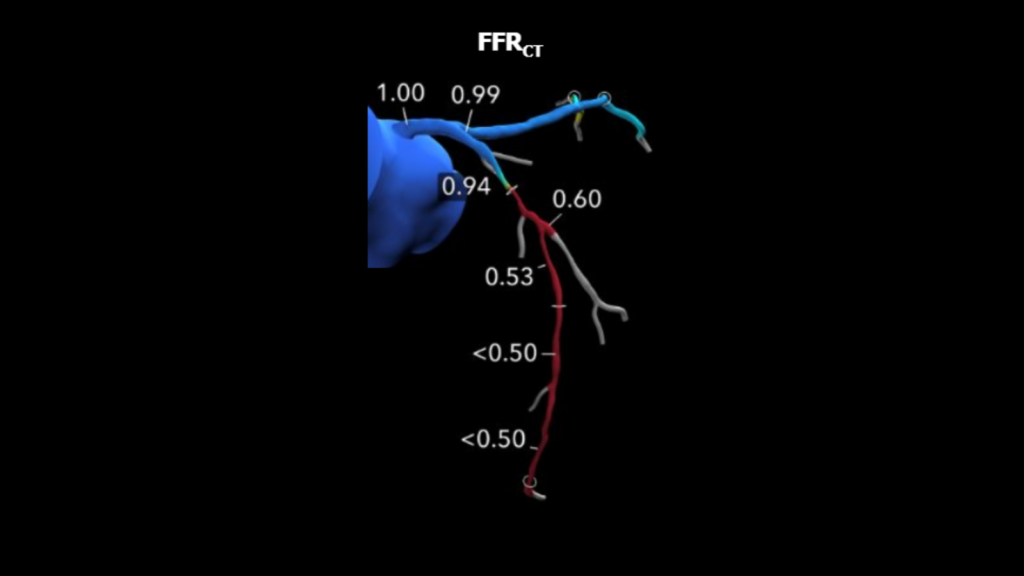
In the trial, health researchers set out to determine if specialist software (called CT- fractional flow reserve, or CT-FFR) applied to a CTCA scan could help improve how doctors plan a PCI procedure.
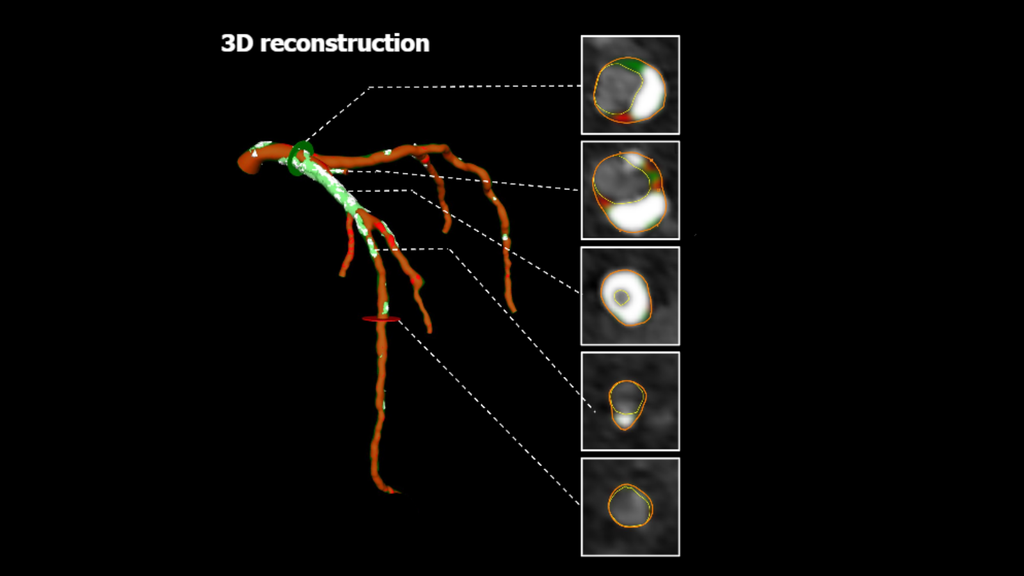
The software creates a virtual 3D model of the heart that can predict blood flow patterns and analyse plaques to see whether stents and other specialised equipment are needed.
Doctors can also perform ‘virtual’ stenting to predict whether symptoms will be improved with the stent treatment.
Patients were randomly allocated to either receive a CTCA guided PCI, or the current standard to guide stent placement.
Results of the Precise Procedural and PCI planning (P4) trial confirmed that a CTCA-guided procedure was ‘non-inferior’ to standard PCI, meaning it is equally effective as the current standard.
Shortened procedure by 17 minutes

Dr Alan Bagnall, consultant interventional cardiologist at Newcastle Hospitals and UK chief investigator for the trial, said:
“Invasive angiograms have been used for many years and are a safe and effective way of helping doctors to plan and deliver a stenting procedure, however there are some limitations.
“Currently, some information, such as the size of the stent required and the extent of damage to the arteries, can only be gathered once the doctor starts the procedure.
“Our research found that, with the addition of specialist software, the same CT used for diagnosis can now also provide the level of detail needed to help doctors plan the procedure ahead of time.
“This gives time to discuss the risks and benefits with patients in advance and ensure that all the necessary equipment is available. We also found that advanced planning shortened procedure time by around 17 minutes.”
Comparable clinical outcomes
A total of 1,105 patients took part in the study, which was led globally by Dr Carlos Collet, an interventional cardiologist based at the Cardiovascular Research Foundation in New York. He said:

“P4 shows that, in appropriately selected patients, planning treatment with a detailed CT scan can achieve comparable clinical outcomes to ultrasound guidance from inside the artery, while shortening procedures and using less contrast dye.
“The opportunity is to make better use of the information we already have before the patient enters the catheterisation laboratory. This could help us deliver more efficient, personalised treatment and bring carefully planned care to more patients worldwide.”
Patients for the trial were recruited from 23 sites spanning the UK, Europe, Asia and the United States.
Dr Bagnall, who is also honorary senior lecturer at Newcastle University, led the UK arm of the trial, supported by Dr Ian Purcell, consultant cardiologist at the Freeman Hospital, and the trust’s cardiology research team.
Results of the trial have been shared in prestigious medical journal, The New England Journal of Medicine.
Further information
- The trial was sponsored by CoreAalst Bv who received research grants from GE HealthCare and Heartflow Incorporated.


