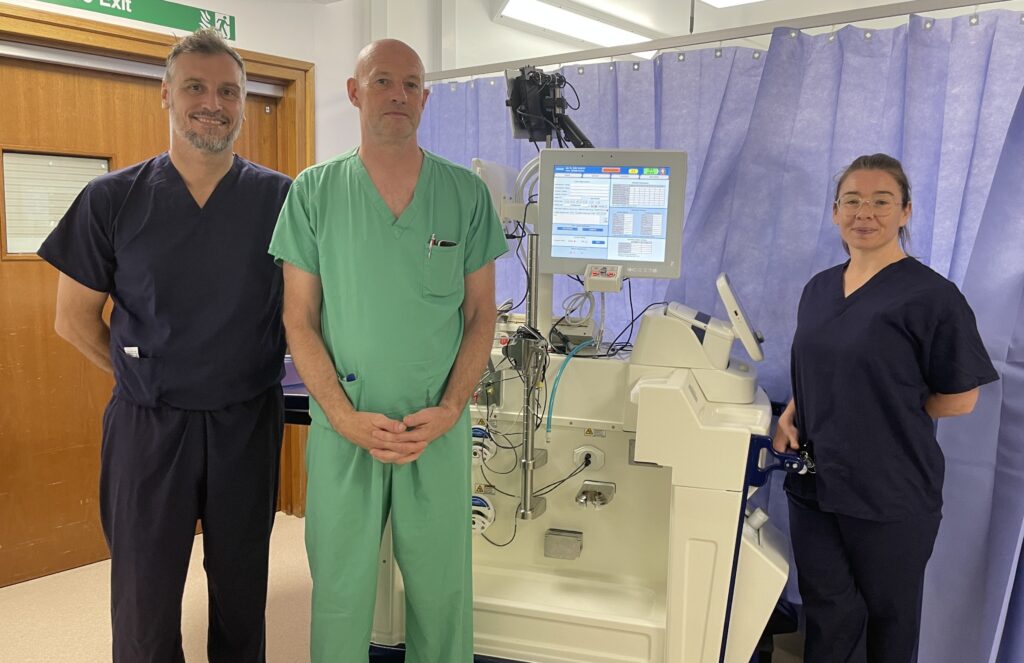


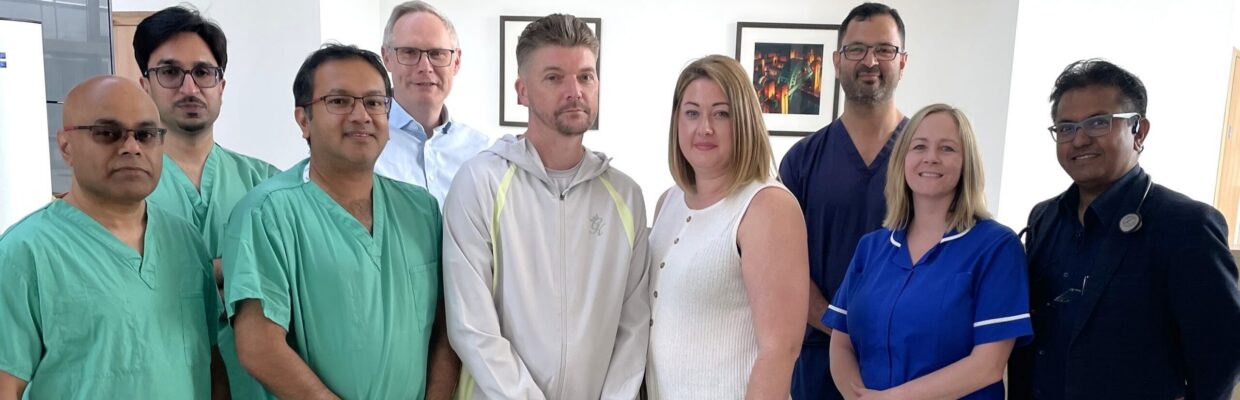
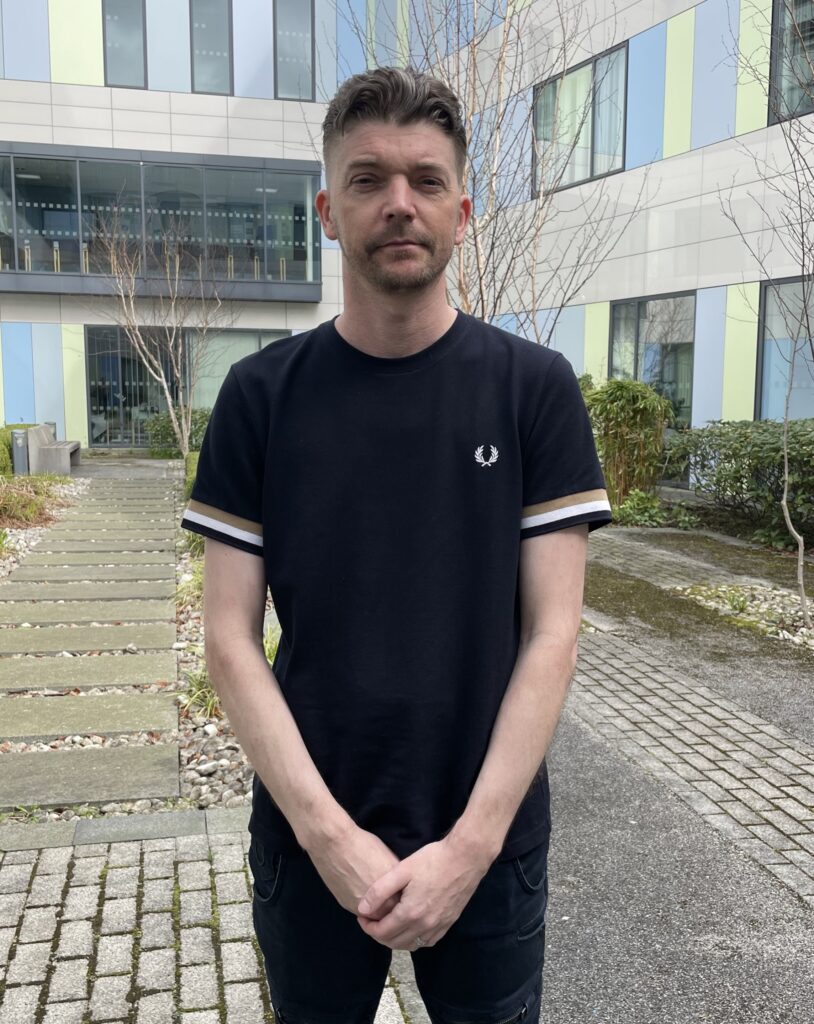
Mark Wrenn has become the first patient to receive a life-saving lung transplant through the Newcastle Organ Assessment Hub (NOAH), based at the Freeman Hospital.
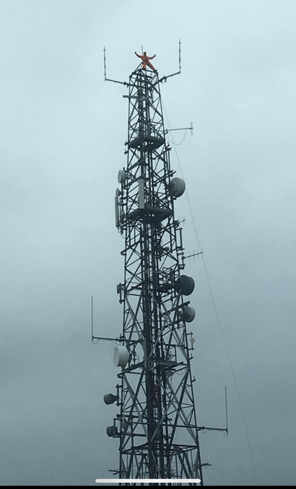
Mark had previously been fit and healthy, working in a physically demanding role as a telephone engineer, climbing and repairing telephone masts. In 2018, he began experiencing increasing breathlessness, initially thought to be asthma. Over the following years, his condition worsened significantly, leaving him dependent on permanent oxygen.
At the age of 40, Mark was diagnosed with a rare lung condition, known as obliterative bronchiolitis, alongside an unclassified systemic autoimmune disease. With his lung function reduced to just 22 per cent, he was told that a lung transplant was the only option to save his life.
The new NOAH facility at the Freeman Hospital uses perfusion technology to preserve and assess donated organs, helping make more organs suitable for transplantation. Mark was offered the opportunity to receive a transplant using this innovative organ preservation technology, becoming the first patient to benefit from Newcastle’s newly launched ex-vivo lung perfusion (EVLP) programme.
Perfusion technology keeps donor organs supplied with oxygenated blood or nutrient‑rich fluids, extending preservation time and allowing a more thorough assessment before transplant. Newcastle Hospitals has been at the forefront of organ perfusion innovation, having performed the UK’s first EVLP transplant in 2009. NOAH is the only site in the country offering lung, liver and kidney perfusion under one roof.
Mark said: “Without NOAH, I would still be waiting for a transplant – it’s genuinely saved my life. When I was told about this new technology and the opportunity it gave me, it felt like hope. I’ve gone from being on permanent oxygen and struggling to do everyday things, to starting to get my life back again. Being able to spend time with my wife and children and think about the future once more means everything. I’ll always be grateful to the donor family and to the teams here in Newcastle who made this possible.”
Mark, who married his wife Laura last November, is now adjusting to life after transplant. He is enjoying spending time with his children, Ava, 15, and Lucas, 11, and is gradually getting back to everyday activities, including returning to his love of sports cars.
Teams in Newcastle have already performed lung, liver and kidney transplants using this technology, demonstrating the expertise, collaboration and innovation across the Trust.
Dr Gerard Meachery, consultant in respiratory and transplant medicine and joint director of the Cardiothoracic Transplant Programme at Newcastle Hospitals, said: “Newcastle Hospitals is delighted to bring lung, liver and kidney perfusion together under one roof at NOAH. This transformative approach reflects our commitment to innovation and gives more patients the chance of transplants.
“For Mark and his family, the impact has already been life-changing – offering hope, recovery and a future that once felt out of reach.”
Mr Izanee Mydin, consultant cardiac and transplant surgeon at the Freeman Hospital was the lead EVLP operator and also the lead surgeon for Mark’s lung transplant. He worked closely with Mylvaganam Jeyakanthan, senior retrieval surgeon, who was also crucial in pushing the programme forward.
Izanee said: “I’m incredibly proud to have performed Freeman Hospital’s first EVLP-supported lung transplant using the XVIVO XPS machine in our new NOAH site— this is a major step forward for our programme.
“This achievement reflects the expertise and dedication of a truly outstanding multidisciplinary team, including colleagues across surgery, perfusion, respiratory, theatres and anaesthetics. It’s a powerful example of how collaboration can drive innovation and improve outcomes for patients.”
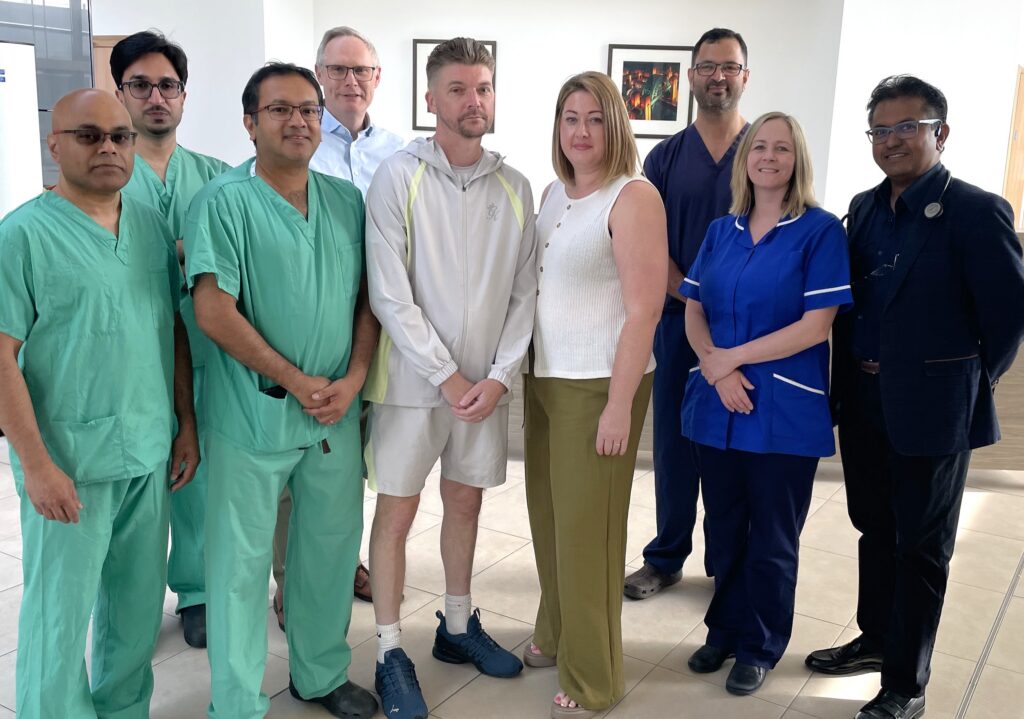
Professor Andrew Fisher, NHSBT national clinical lead, added: “Mark’s story clearly shows the tremendous benefits that organ perfusion technology can have for people waiting for a transplant.
“Allowing organs that might not otherwise have been used to be carefully assessed and safely transplanted improves the chances of receiving a transplant and means more of the organs gifted can be successfully used.
Newcastle Hospitals Charity helped to fund the new EVLP equipment on the new NOAH site. Teri Bayliss charity director at Newcastle Hospitals Charity said: “As the official charity for Newcastle Hospitals, we’re proud to support innovative, lifesaving and life-changing technology like this. It is amazing to see the impact this is already having – and will continue to have – on patients and their families. We are only able to fund these transformative programmes thanks to the incredible generosity of our many fundraisers, supporters and donors.”
The Freeman Heart and Lung Transplant Association (FHLTA), an independent charity supporting the Freeman Hospital, also funded specialist training for clinicians to provide hands-on experience in EVLP, helping to expand expertise.
The Freeman Hospital was selected by NHS Blood and Transplant (NHSBT) earlier this year as one of 15 pilot sites across the country to host assessment and recovery centres (ARC). By improving the quality of organs that might otherwise be declined, the ARC programme has the potential to significantly increase transplant activity. NHSBT estimates that a fully established national network could enable up to 750 additional life-saving or life-improving transplants every year.