

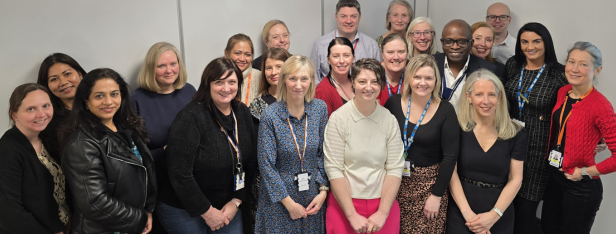
This bowel cancer awareness month, our bowel screening team is urging eligible people to complete the bowel cancer screening test when they receive it.
Bowel cancer is cancer that’s found anywhere in the large bowel, which includes the colon and rectum. It is the fourth most common cancer in the UK and more than nine out of ten new cases are diagnosed in people aged 50 and older.
Early detection is vital
The earlier bowel cancer is spotted, the more treatable it’s likely to be. Bowel cancer screening is currently offered to people aged 50-74 every two years through a test taken at home. Known as a faecal immunochemical test (FIT), it looks for blood in a sample of poo.
If you’re registered with a GP, you’ll automatically get a kit through the post every 2 years.
Newcastle Hospitals and Northumbria Healthcare NHS Foundation Trusts run the North of Tyne bowel cancer screening programme.
Thousands of tests sent out each year
In 2024, the team sent out 127,000 test kits, increasing to 144,000 in 2025. Last year, this led to more than 2,000 appointments with the specialist screening practitioner (SSP) team and more than 2,000 diagnostic tests.
A total of 67 cancers were found, with around half being at an early stage which helps lead to better outcomes for patients.
Programme manager, Catherine Wilson, said: “The screening programme expanded in late 2024 to include people from age 50, which meant we increased our activity last year. The team stepped up and continued to provide a brilliant service to our patients.
“We also underwent a successful review by the screening quality assurance service. It’s great to have that external validation of our programme and the hard work of all the staff involved.”
“I would urge everyone who gets a test to do it”
David Nylander, a consultant gastroenterologist at Newcastle Hospitals, is the North of Tyne programme’s clinical lead.
“Bowel cancer is one of the most common cancers in the UK and your risk of getting bowel cancer gets higher as you get older,” he said. “The screening programme helps us find cancer early, often before you have any symptoms. This can make it easier to treat, treatment can be less intensive, and it increases chances of survival.
“I would urge everyone who gets a test to do it. Most people who complete their test will not need further checks, but if you do then early action could save your life.”
Supporting patients

Having to undergo a test such as a colonoscopy knowing that you might have cancer is a worrying time for anyone. That’s why a crucial part of the service is the SSP team.
Lead specialist screening practitioner, Emma Robinson, said: “Our specialist screening practitioners are so important to the experience of patients going through the programme. They support patients through the process from their first clinic appointment to discharge.
“A patient’s journey may bring them into contact with different services – endoscopy, radiology, pathology, pharmacy, gastroenterology – and our role is to make that as simple and seamless as possible.”
In January, NHS England announced it is to lower the threshold for further investigation to help detect around 600 more bowel cancers early each year. This will further expand the work of the North of Tyne team.
The programme has also recruited a health improvement practitioner to focus on areas of low uptake, helping to tackle health inequalities.
Our bowel cancer screening team is hosting stalls at the Freeman and RVI on the below dates. If you have any questions about screening, please pop along and chat to the team.
- Freeman Hospital main reception: 21 April from 10am
- RVI (in front of MediCinema): 28 April from 10am


